By Jemimah Wellington, JKNewsMedia Correspondent
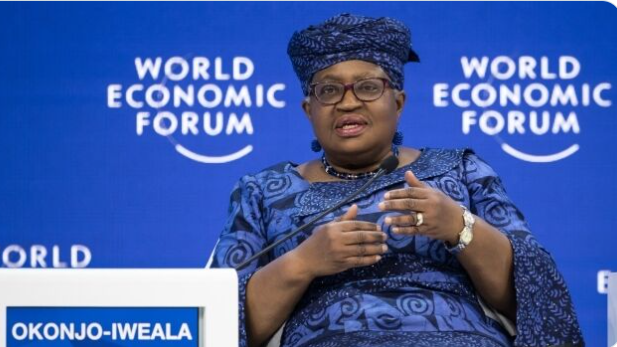
DELIBERATING TARGETING of global investors and relocating supply chains can cut import dependence, deepen manufacturing and create jobs in Nigeria, the Director-General of the World Trade Organisation (DG/WTO), Dr Ngozi Okonjo-Iweala, has said.
The advice came on Wednesday at Nigeria House during the World Economic Forum (WEF) in Davos, where Dr Okonjo-Iweala spoke during a panel discussion titled “From Scale to Capital: Financing Nigeria’s Role as Africa’s Digital Trade and Infrastructure Anchor”.
She said rising geopolitical tensions, particularly between the United States (US) and China, had accelerated global supply chain diversification, adding that firms were increasingly adopting China+1 sourcing strategies to reduce single country risk, even as China remained deeply embedded in global value chains.
She said tariffs and trade restrictions had also pushed companies to reconsider reliance on dominant suppliers, leading to relocation or diversification of production hubs.
“These disruptions present an opportunity for Nigeria to capture a share of global supply chains,” she said, noting that doing so would require aggressive marketing of the country to prospective investors.
She said reforms underway needed to translate into employment, adding that she had told President Bola Tinubu that the focus must move from stabilisation to job creation.
She said the shift would not happen overnight but added that the country was moving in the right direction and needed to map where the opportunities were.
She called for sustained efforts to attract investment, saying there was an opportunity to bring supply chains into the country and that everything possible should be done to showcase Nigeria as worthy of investment.
She urged deliberate strategies to pursue investors globally, including in China and the US, saying Nigeria should attract a sizeable share of supply chain diversification, even as much of the movement remained within Asia and India.
She cited opportunities in solar panel manufacturing, fashion and textiles, saying Nigeria could manufacture locally rather than rely on imports, and noted that many textiles worn in the country were not made locally.
She also pointed to pharmaceuticals as another area with supply chain opportunities.
Also on the panel was the Managing Director of the Bank of Industry, Dr Oludapo Olusi.