By Joke Kujenya
A DISTURBING trend has been gradually spreading across social media platforms, and many people are pretending not to see it.
Or perhaps the agencies expected to enforce regulations including governments, health regulators, and social media platform operators have all, up till now, failed to act against dangerous drug advertising.
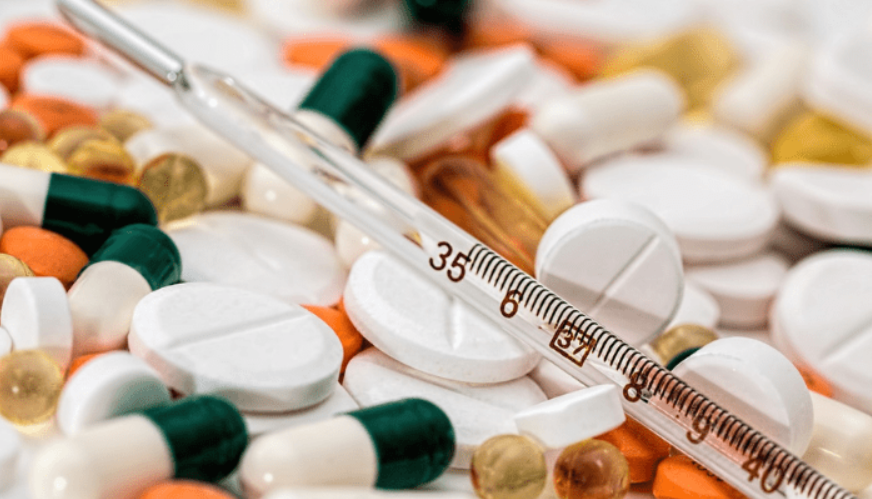
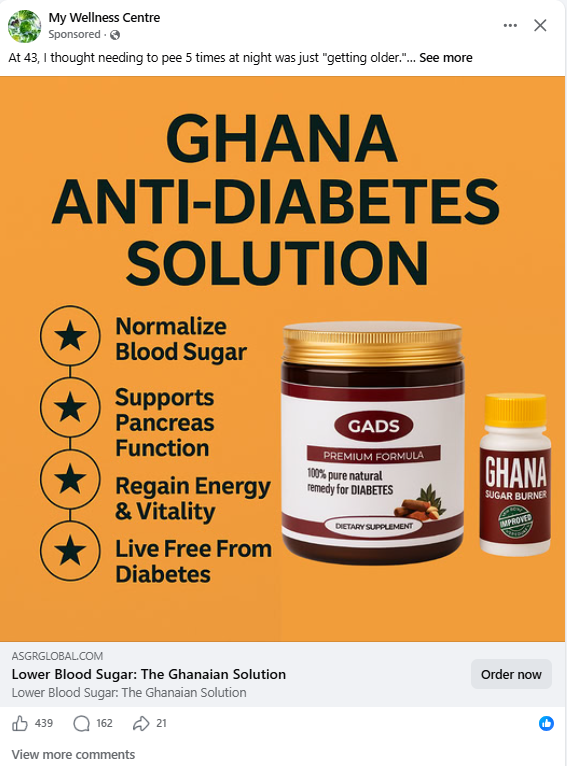
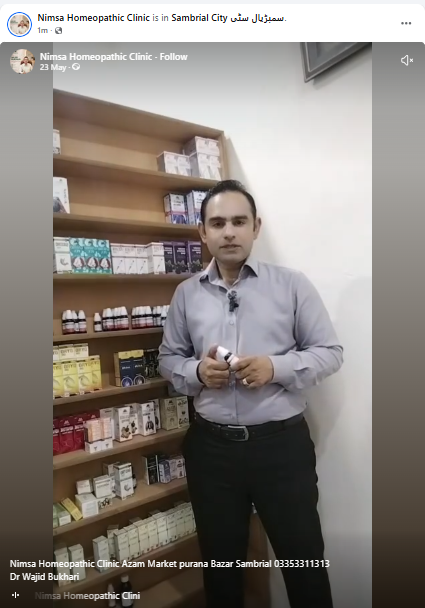
Every day on Facebook, LinkedIn, X and other platforms, people with no medical training are advertising powerful clinical drugs as if they were selling shoes, perfumes or mobile phones.
One scroll through social media, especially Facebook in particular, is enough to find strangers promoting magical health cures for diabetes injections, blood pressure medicines, fertility drugs, weight-loss treatments and even antibiotics.
Some proudly call themselves “vendors.”
Others hide behind titles like “wellness coach” or “health consultant.” Many have no pharmacy licence, no medical qualification and no business handling drugs that can alter human lives.
Yet these platforms seem to be allowing it. That should worry everyone, I guess.
Medicines are not ordinary products. A wrong shoe size may hurt your feet.
A wrong drug dosage can destroy a kidney, damage the liver or end a life.
Diabetes medicines, for example, are meant to be prescribed by a certified medical doctor after proper medical examination.
Doctors consider age, blood sugar level, medical history and possible side effects before recommending them.
But on social media, these drugs are now marketed with flashy videos, emotional testimonies and “DM to order” captions.
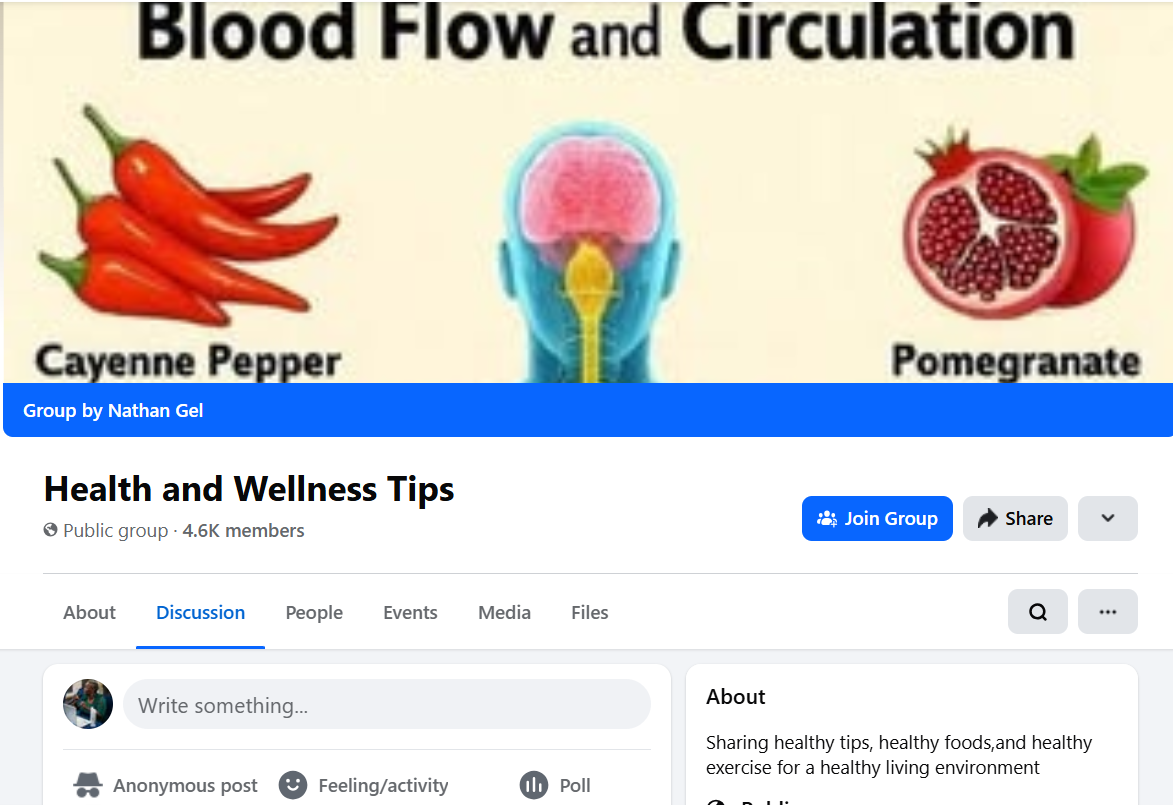
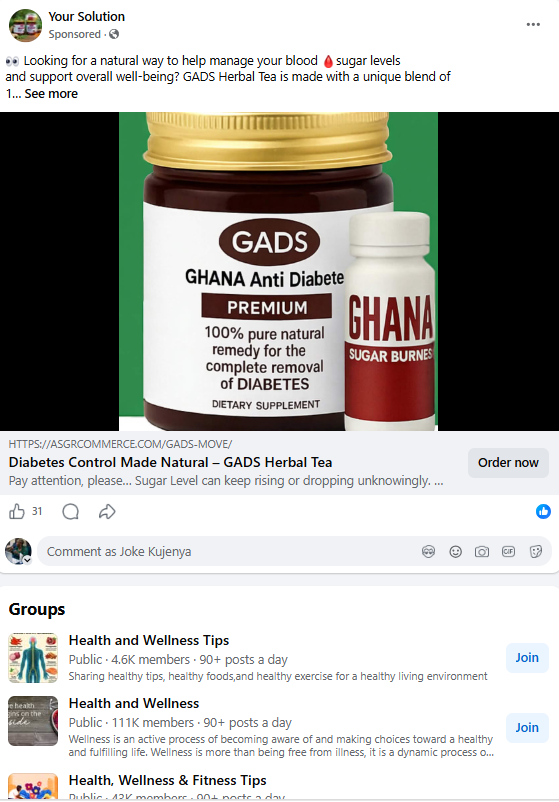
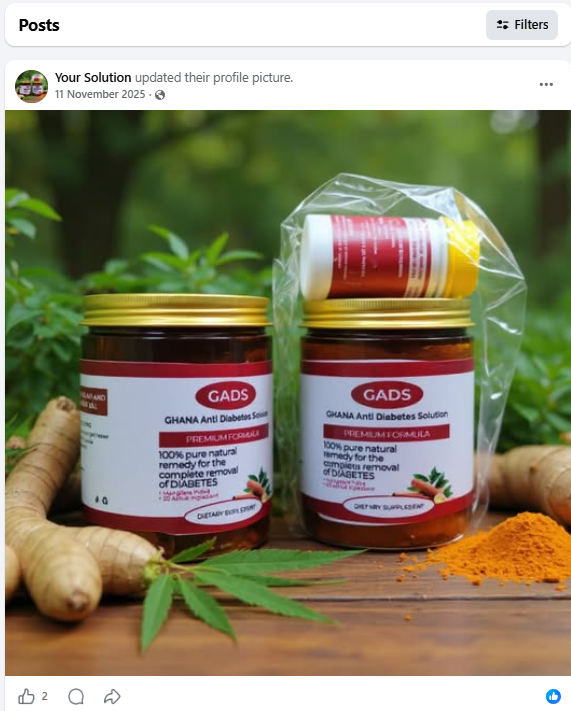
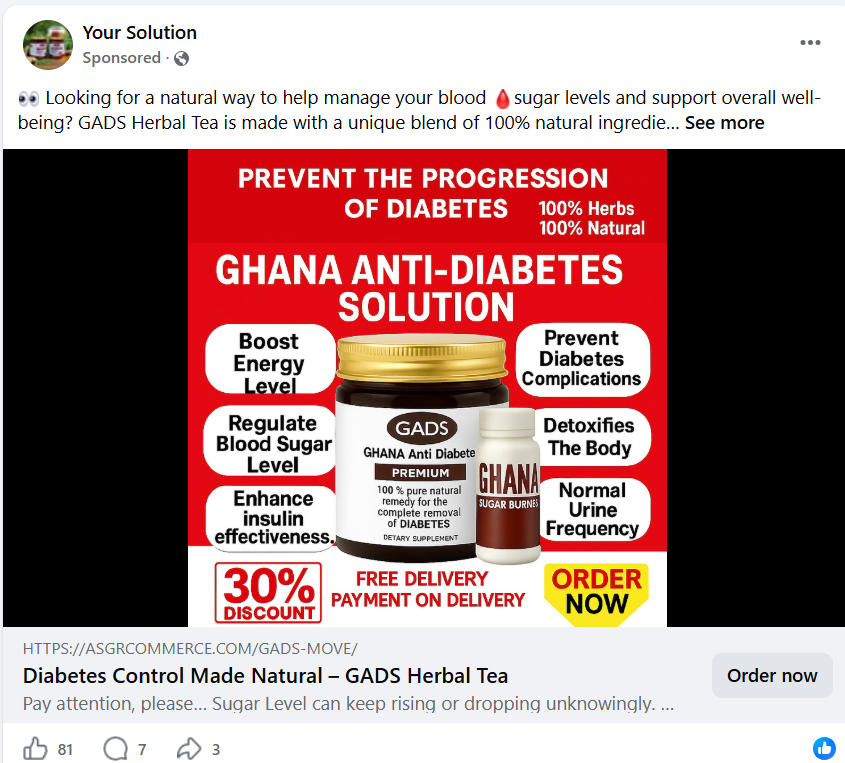
Coincidentally, they all go by the same name: Health and Wellness, Wellness 360 … One calls itself Your Solution …
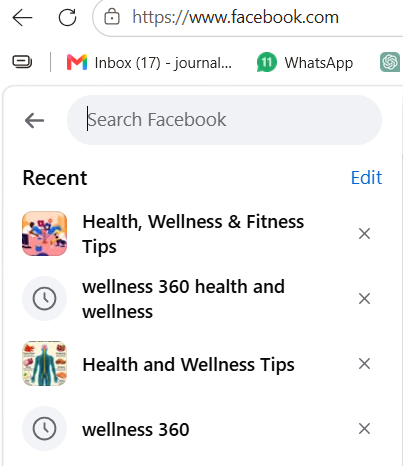
A particular diabetes cure on Wellness 360 on Facebook reads. . .
“𝗜𝗳 𝘆𝗼𝘂’𝗿𝗲 𝗹𝗶𝘃𝗶𝗻𝗴 𝘄𝗶𝘁𝗵 𝗱𝗶𝗮𝗯𝗲𝘁𝗲𝘀 𝗿𝗶𝗴𝗵𝘁 𝗻𝗼𝘄, 𝘆𝗼𝘂’𝗿𝗲 𝗻𝗼𝘁 𝗿𝗲𝗮𝗹𝗹𝘆 “𝗶𝗻 𝗰𝗼𝗻𝘁𝗿𝗼𝗹.” 𝗬𝗼𝘂’𝗿𝗲 𝗷𝘂𝘀𝘁 𝗺𝗮𝗻𝗮𝗴𝗶𝗻𝗴 𝗳𝗲𝗮𝗿.
Fear of eating the wrong thing.
Fear of your sugar suddenly spiking.
Fear of waking up one day and hearing “it has gotten worse.”
Because deep down, you already know something isn’t right.
And if you’ve tried:
• cutting sugar
• avoiding certain foods
• taking your drugs consistently
…but somehow, your numbers still go up and down like a game.
One day it’s “okay”…
Next day it’s worse again.
It’s frustrating.
It’s exhausting.
And nobody is giving you a straight answer.
Here’s the truth most people won’t say:
You’re not actually fixing diabetes.
You’re just chasing it.
Every day.
And while you’re doing that…
your body is slowly paying the price.
Your energy drops.
Your body feels weak.
Small issues take longer to heal.
And that silent fear? It never leaves.
Because diabetes doesn’t shout.
It destroys quietly.
Now listen carefully—
The problem is not just “high sugar.”
The real problem is that your body has lost its rhythm…
the system that’s supposed to control sugar is broken.
And drugs alone won’t fix that.
That’s why no matter how careful you try to be…
you still feel stuck.
This is where Dr Daniel Sulieman’s Diabetes Fix (10 Days Routine) changes everything.
This is not motivation.
This is not theory.
This is a clear, day-by-day system designed to help your body reset.
Inside, you’ll see:
• exactly what to eat (using normal, local foods)
• what you’re doing daily that is secretly worsening your condition
• how to stabilize your sugar step by step
• a simple 10-day routine you can actually follow without stress
No confusion.
No complicated instructions.
No false promises.
Just a practical system that makes sense… and works with your body, not against it.
⚠️ But here’s the part you shouldn’t ignore:
Every extra day you “wait and see”…
is another day your body keeps struggling.
And diabetes doesn’t wait for you to be ready.
This ebook is delivered instantly to your WhatsApp.
Start now for just ₦10,000.
No delays. No excuses.
👉Tap the WhatsApp button now and get the Diabetes Fix immediately before this gets worse…”
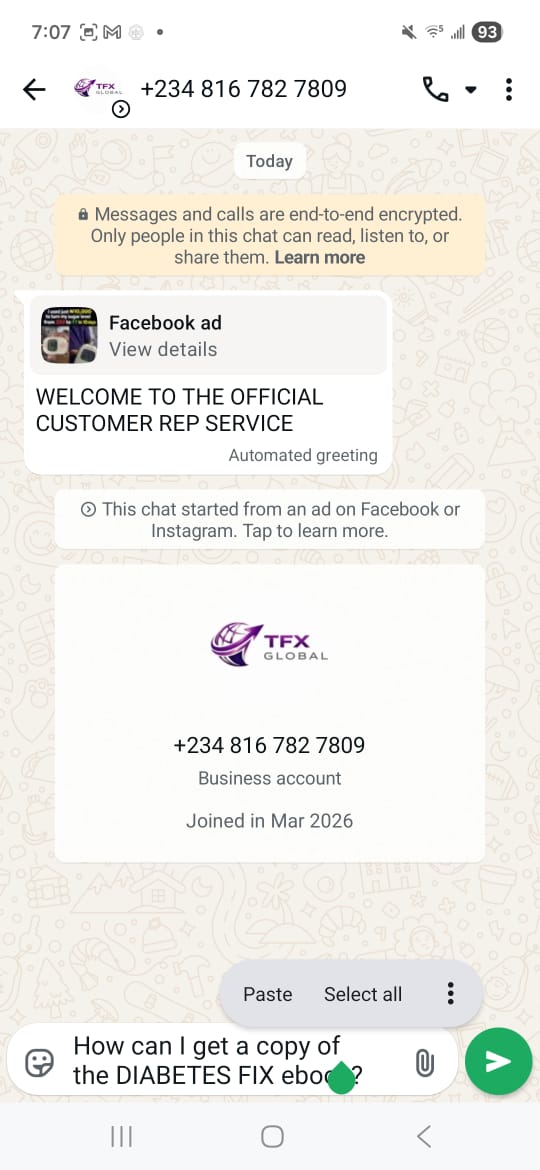
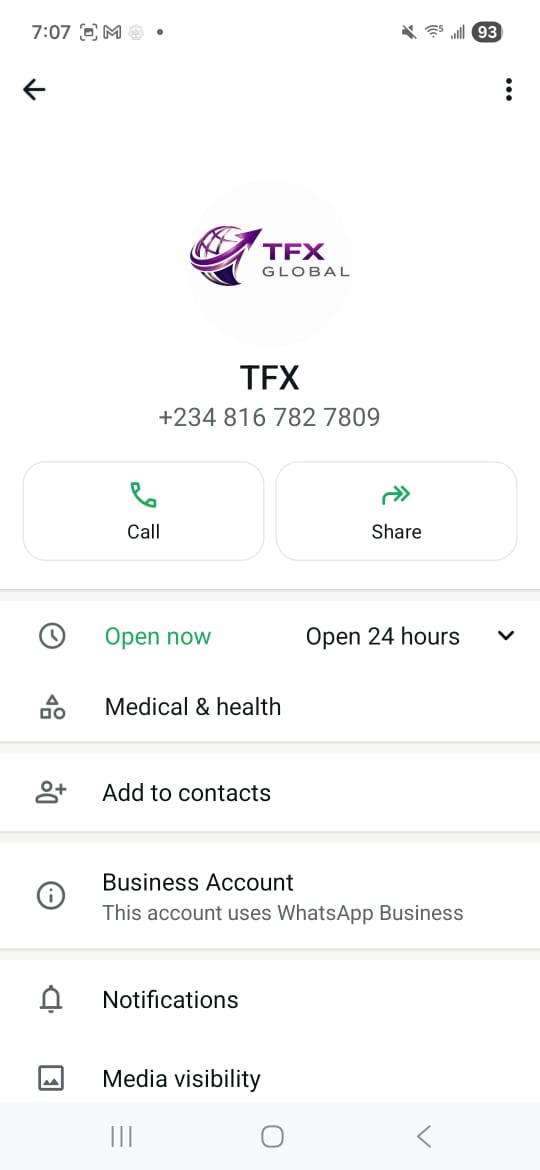
A visit to each and every single one of these phony “Wellness” pages promises total cure all for every ailment and diseases.
In October 2025, a tear-jerking story was that of the late Pa K. Akintoye, who resided in the Ipaja area of Lagos which led to his death.
His daughter, Bimpe Iyoha (married), recounted that after years of treatment, doctors had eventually assured the family that her dad had become a diabetes survivor.
However, what followed came as a devastating shock.
Bimpe explained that barely two weeks after her father was certified diabetes-free, he began experiencing severe cramps and would sometimes roll on the floor like a little child.
When she was informed, she said she became confused and could not understand what had gone wrong, prompting her to call their family doctor and requested an urgent meeting at her father’s home.
During the meeting, they sought answers from the elderly man himself. He revealed that he had been sitting at home one day browsing Facebook when he came across an advertisement for a medical herb claiming to provide a final cure for “everything about diabetes,” even after he had been declared diabetes-free by medical practitioners.
According to him, the advert was highly persuasive, describing symptoms he had previously experienced during his illness, which made it appear credible.
He said he called the number provided, spoke with a man who identified himself simply as “Isaac,” and was further convinced by him. He then made payment and also paid for delivery to his home.
Without informing any member of his family, he began taking the herbal mixture. Within a few days, he realised something had gone terribly wrong.
His body began to deteriorate rapidly as he vomited blood, suffered uncontrollable bowel movements, and became too weak to stand. He understood that his condition was worsening dangerously and that his life was slipping away.
Hearing this, his family doctor wasted no time in arranging for an ambulance to take him to a state government hospital, emergency doctors found that his blood sugar level has spiked dangerously, and they reportedly told them that his condition was critical and that he might not survive beyond 72 hours.
The family attempted to trace the source of the herbal product, but none of the contact numbers were reachable. Instead, they received an automated message stating that the number was no longer assigned to any user.
In his final moments, Pa Akintoye reportedly apologized to his family for trusting strangers over those closest to him, acknowledging the grave mistake that had led to his decline, before he passed away.
Evidently, behind the glossy visuals and emotional testimonials lies a loosely monitored industry fueled by desperation, weak enforcement, and algorithms that reward sensational health claims.
And for many consumers, the consequences have been found devastating.
How did we get here?
Why are giant technology companies allowing their platforms to become open drug markets without serious verification? I am seriously bothered by these anomalies.
Social media companies often speak loudly about misinformation, harmful content and user safety.
▪️They suspend accounts over copyright claims within minutes.
▪️They flag political posts.
▪️They monitor violent content.
But somehow, dangerous drug advertising by unqualified individuals continues almost unchecked.
Now, this somewhat silence is alarming.
The danger becomes even greater because many users trust what they see online. Some believe that if a post appears on a major platform, then it must be safe.
Others are desperate for quick solutions to health problems.
Rising healthcare costs and poor access to hospitals in many countries have pushed vulnerable people towards social media “drug sellers” who promise miracle results.
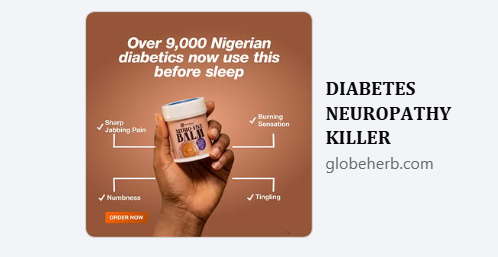
Health seekers’ desperation is now being exploited.
Another danger is that a diabetic patient may gullibly stop proper treatment after watching a convincing online video like the late old man did.
Someone struggling with weight may buy injections without understanding the risks.
An innocent pregnant woman may take fertility drugs from an unverified seller.
A teenager may experiment with medicines simply because an influencer promoted them.
These are not small mistakes. These are life-threatening decisions.
The long-term implications could become disastrous if this trend continues unchecked. People will die silently without any trace to these online medication peddlers.
First, fake and expired drugs could flood communities more easily.
Counterfeit medicine is already a major global problem whilst social media gives illegal sellers direct access to millions of people without physical shops or proper regulation.
Second, drug abuse could rise sharply.
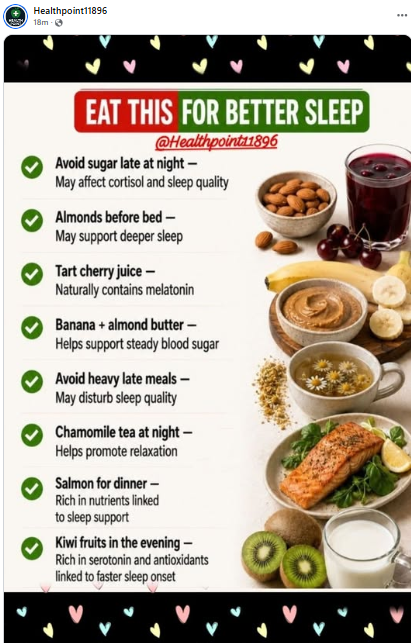
Medicines designed for controlled treatment may become lifestyle products pushed by influencers chasing clicks, engagement and profit.
Third, public trust in healthcare could suffer.
When unqualified voices dominate medical conversations online, professional medical advice begins to compete with internet noise. In many cases, the loudest voice wins — not the most qualified one.
Then comes the legal and moral question.
If someone dies after buying wrongly advertised medication through a social platform, who carries responsibility?
▪️The seller alone?
▪️Or the platform that provided the advertising space, collected advertising revenue and failed to stop dangerous promotions?
Technology companies cannot continue acting like neutral bystanders while profiting from harmful medical advertising.
There must be stronger action.
▪️Platforms should demand verified licences before anyone advertises prescription or clinical drugs.
▪️Medical advertising should face strict review systems, just as financial and political advertisements often do.
▪️Governments and health regulators must also stop treating social media drug sales as a minor issue.
It is actually a public health concern, and more so now!
More importantly, users must learn caution.
Not everybody with a ring light, smartphone camera and confident voice is qualified to discuss medicine.
A viral post is not a medical prescription.
An influencer is not automatically a doctor.
Even experts had once raised concerns over menace of free advertisement of drugs on social media. Was there any helpful reaction to stop them? I know not of any.
Health decisions should remain in the hands of trained professionals, not social media algorithms.
Because when social media starts replacing hospitals, society enters dangerous territory! I have spoken my own O!
—