By Joke Kujenya
Nigerians have been urged to brace up for another rise in petrol prices.
The Nigerian National Petroleum Company Limited (NNPCL) has indicated that another pump price increase is likely soon.
This follows the company’s efforts to reflect the current market conditions.
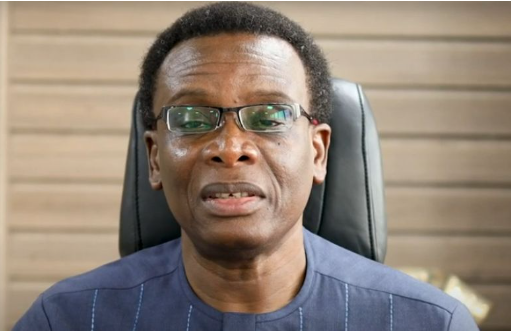
Adedapo Segun, NNPCL’s Executive Vice President, Downstream, revealed this on Thursday, September 5, during an interview on Arise Television.
He explained that the current petrol price is still not fully reflective of market dynamics.
On Tuesday, September 3, the NNPCL adjusted its pump price of petrol to N855, while independent marketers raised their prices above N900, depending on the location.
This is still said to be lower than the landing cost, which hovers around N1,200.
Despite the deregulated market established by the Petroleum Industry Act (PIA), the NNPCL remains the key player in determining fuel supply and pricing.
The company recently disclosed that it has been selling petrol at half its actual landing cost, accumulating debts of $6.8 billion.
Segun emphasized that petrol prices in Nigeria need to align with global market trends.
He pointed out that it’s unusual for prices to remain static for extended periods, as seen in Nigeria. “Fuel prices should move in line with market conditions,” Segun stated.
The executive pointed out that in regions like the United States (US) and in other parts of Europe, fuel prices fluctuate based on seasonal demands.
He explained that higher prices during the summer driving season and lower prices in winter are normal market behavior.
According to Segun, Nigeria needs to adopt this approach to ensure competitive pricing.
Segun’s comments come after concerns about the NNPCL’s recent price hike.
The company raised petrol prices by over 50%, from N568 to N855 per litre, leading to public outcry.
Many Nigerians have questioned why the country struggles with pricing petrol in line with global standards, despite being an oil producer.
When asked about Tanzania’s recent petrol price adjustment, which saw a 4% increase, Segun stated that Nigeria has yet to reach full market pricing for PMS (Premium Motor Spirit).
“We are not there yet,” he admitted, noting that Nigeria’s pricing structure differs from markets with fully deregulated systems.
Segun was unable to clearly state whether the NNPCL supports complete deregulation or prefers to retain some level of control over the market.
“It should be free market, unrestricted market-based conditions,” he said, acknowledging that competition would improve service quality and sector efficiency.
However, former chairman of the Major Marketers Association of Nigeria (MOMAN), Adetunji Oyebanji, remarked that the government still intervenes in fuel pricing.
He noted that while the price hike indicates movement toward deregulation, the market is not yet fully reflective of actual costs.
“There’s still about a 10% government intervention in terms of under-recovery,” Oyebanji said.
The ongoing fuel scarcity across Nigeria has compounded the situation.
NNPCL blames the scarcity on foreign exchange (FX) liquidity issues and mounting debts to its creditors.
Segun explained that the company must balance its debt load with its ability to import products, noting that overspending would only worsen the debt situation.
In recent months, the NNPCL’s hike in petrol prices has significantly impacted Nigerians, who have seen transport fares jump by over 50%.
Till present, many continue to grapple with the rising cost of living as fuel prices approach N1,000 per litre.