By Rosheedat Akinkunle, JKNewsMedia Reporter
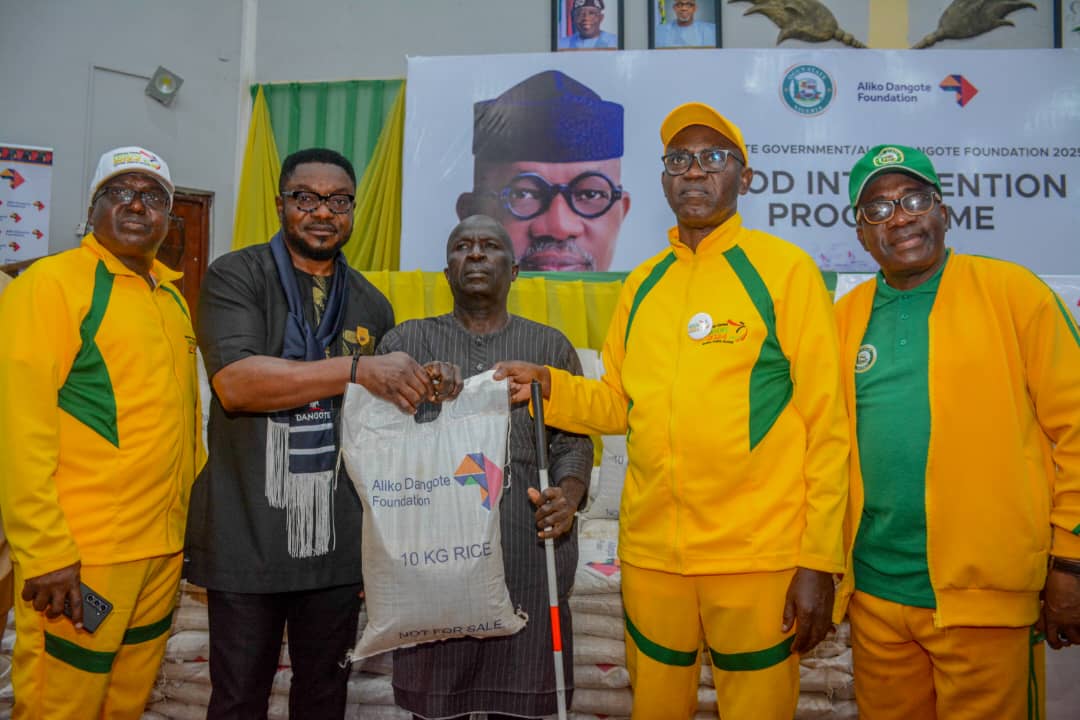
BAGS OF rice filled the Oba’s Complex in Oke-Mosan, Abeokuta, as the Ogun State government, in collaboration with the Aliko Dangote Foundation, commenced the 2025 National Food Intervention Programme with large-scale food distribution aimed at easing the burden of economic hardship.
Governor Dapo Abiodun, represented by Secretary to the State Government Tokunbo Talabi, emphasised the effort as a direct support initiative for citizens grappling with tough economic conditions.
He reaffirmed the state’s ongoing partnership with the Dangote Foundation across key areas such as health, security, and grassroots empowerment.
He cited the foundation’s pivotal role during the COVID-19 pandemic and its provision of patrol vans to bolster security, stressing the value of corporate intervention in public welfare.
“When corporate organisations engage in initiatives like this, it is essential to highlight their efforts so that others can learn from them. Not everything is about making profit and leaving,” Abiodun remarked.
He warned against the commercialisation of the distributed items, stressing that the rice was not for sale.
“To our market women, please do not think that just because someone brought these items to you… the rice is meant to be given out free of charge; it is for empowerment,” he said.
Commissioner for Special Duties and Inter-Governmental Affairs, Funmi Efuape, lauded the foundation for consistently supporting state-led development and CSR efforts that reach underserved communities.
Speaking on behalf of the Dangote Group, Head of Operations Victor Edero described the initiative as part of the foundation’s three-decade mission focusing on health, empowerment, and nutrition.
He said the intervention was timely, considering current economic realities, and urged stakeholders to ensure equitable distribution of the items.
The state’s Iyaloja General, Yemisi Abbas, commended Dangote’s generosity and proposed the introduction of a soft loan scheme to further reduce poverty levels and empower market traders.
Representatives from various groups including People Living with Disabilities (PLwDs), the Trade Council (TC), and student associations expressed appreciation to both the government and the foundation.
They welcomed the cooperation between public and private sectors, noting it as an effective model for community development.
Beneficiaries included Community Development Associations, widows, the Youth Council, women’s groups, artisans, and others, all of whom received bags of rice earmarked for redistribution to members within their respective constituencies.