By Joke Kujenya
AS PEOPLE grow older, one of the most familiar changes is the quiet loss of energy. Tasks that once felt easy begin to take more effort, recovery takes longer, and the body simply does not feel as responsive as it used to.
JKNewsMedia.com reports that now, scientists in Germany say they may have uncovered one of the hidden reasons behind this decline – and it comes down to something surprisingly simple inside our cells.
Researchers at the Leibniz Institute on Aging in Jena in a study report, have found that a naturally occurring nutrient called phosphatidylcholine may play a far bigger role in ageing than previously thought.
Their findings suggest that when levels of this nutrient drop, the body’s cells begin to lose their ability to produce and manage energy efficiently.
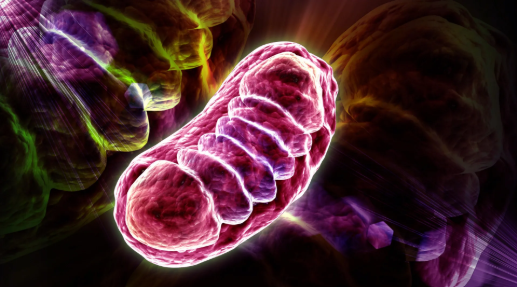
At the centre of the discovery are mitochondria often described as the tiny “power stations” inside cells. These structures are responsible for producing the energy that keeps every part of the body running, from muscle movement to organ function and tissue repair.
But like everything else in the body, mitochondria change with age.
When the cell’s energy system begins to weaken
The researchers noted that over time, mitochondria become less flexible and less connected. Instead of working together in a well-organised network, they start to break apart and function in isolation. This weakens their ability to share energy and repair damage.
The German research team also found that phosphatidylcholine plays a key role in keeping these mitochondrial membranes flexible and healthy.
It helps the structures stay connected so they can function like a coordinated energy network rather than isolated units.
When levels of this nutrient drop with age, the system begins to fail.
“What we are seeing is not just damage building up, but a loss of flexibility in how energy is managed inside the cell,” the researchers explained. “Once that flexibility is gone, the system becomes less efficient.”
A surprising reversal in lab tests
To test their theory, German scientists carried out experiments using laboratory organisms. When they reduced the genes responsible for producing phosphatidylcholine, the mitochondria quickly began to resemble those found in much older cells – fragmented, weaker, and less efficient.
But what happened next surprised them.
When phosphatidylcholine or even its dietary building block, choline was added back into the system, the ageing cells began to recover. Within just a couple of days, the mitochondria regained a more youthful structure and improved function.
They described the result as striking, suggesting that some aspects of cellular ageing may not be fixed or irreversible, as once believed.
Rethinking how ageing happens
For years, scientists thought mitochondrial decline was mainly caused by accumulated genetic damage.
This new research points to something different as well changes in the fats that make up cell membranes.
These fats, known as lipids, are not just structural material.
They help determine how flexible and responsive mitochondria are.
When their composition shifts with age, the entire energy system inside the cell becomes less stable.
The team also found that these changes may not happen all at once. Instead, ageing appears to unfold in stages – first affecting how cells cope with stress, then disrupting energy use, and later altering deeper biological functions.
Why this matters beyond the lab
Although the work was carried out in worms and human cell studies, the researchers also looked at large human health datasets. They found similar patterns in lipid changes as people age, including a noticeable drop in phosphatidylcholine levels in later life.
Interestingly, this decline appeared more strongly in women around menopause, a time when many also report increased fatigue and reduced energy levels.
While the research does not claim a direct treatment for humans yet, it opens an important possibility – that supporting certain nutrients in the body may help maintain cellular energy for longer.
A small shift with big questions
Perhaps the most striking takeaway is that some age-related changes inside cells may be more flexible than once believed.
When phosphatidylcholine levels were restored in older organisms, their cellular energy systems improved. Even when introduced later in life, the nutrient still showed positive effects.
The researchers say more work is needed before any conclusions can be drawn for human health or treatment. But the findings are shifting how scientists think about ageing itself – not only as a slow decline, but as a process that may be influenced, adjusted, and in some cases, partially reversed at the cellular level.
For now, the discovery adds a new layer to an old question: why do we age, and how much of it can truly be changed?
—