By JKNewsMedia Reporter
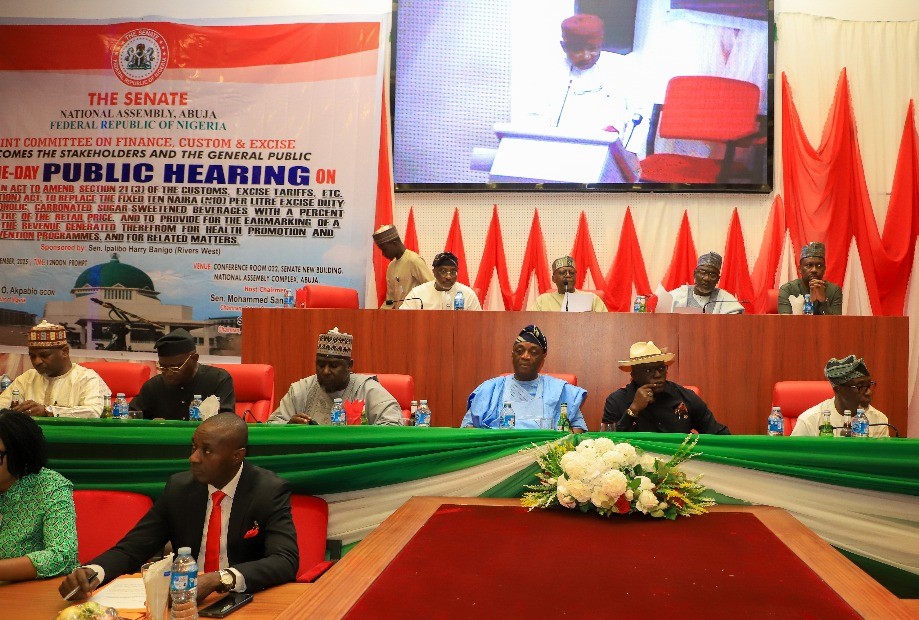
GROWING EVIDENCE of diet-linked illnesses propelled fresh demands for a stronger sugar-sweetened beverage tax during a Senate public hearing, where health officials, civil society groups and public-health advocates urged lawmakers to abandon the fixed N10-per-litre duty and adopt a percentage-based system tied to retail prices, with part of the revenue earmarked for health programmes.
The Senate Joint Committee on Finance, Customs and Excise convened the session to examine a bill seeking to amend Section 21(3) of the Customs, Excise Tariffs, Etc. (Consolidation) Act.
Stakeholders told the committee that Nigeria was experiencing a surge in noncommunicable diseases associated with excessive consumption of sugary drinks and unhealthy diets.
According to their presentations, illnesses that were once considered rare—such as diabetes, stroke, obesity and heart disease—had become leading causes of premature death.
The bill, sponsored by Senator Ipalibo Harry Banigo, proposes replacing the fixed ₦10-per-litre excise on non-alcoholic carbonated beverages with a percentage levy based on the retail price. It also provides for earmarking part of the revenue for health promotion and disease-prevention initiatives.
Speakers maintained that this restructuring was necessary to restore the effectiveness of the tax and respond to the rising health burden.
Representing Senate President Godswill Akpabio, Senator Adeniyi Adegbonmire described the proposal as crucial for public health.
Echoing earlier debates, he stated that the amendment represented a public-health investment strategy aligning taxation with national priorities.
He explained that the aim was not to burden citizens but to redirect part of the existing revenue to programmes and infrastructure intended to improve wellbeing.
He added that the existing ₦10 duty had become unrealistic, both in light of the depreciating naira and the costs of providing health interventions.
The Ministry of Finance presented its position through Bashir Abdulkadir, Director of Technical Services, who stood in for Minister Olawale Edun.
The ministry confirmed its awareness of the bill and noted broad alignment with its objectives. However, the presentation referenced Section 13 of the Customs, Excise Tariffs, Etc. (Consolidation) Act, which vests authority in the president to vary excise rates.
The ministry informed the committee that it was working on a comprehensive review of excise structures covering sugary drinks and alcoholic beverages.
It called on the Senate to consider this ongoing process while deliberating on the proposed amendment.
The Joint Committee responded by affirming its constitutional power to conduct public hearings and amend legislation.
Members said the matter carried national significance and addressed concerns raised by Nigerians regarding public-health protection.
Health Minister Prof Ali Pate and several civil society organisations described the situation as urgent, citing the public-health implications of rising consumption of sugary drinks.
They argued that the current tax, introduced by the Federal Government in 2021 as a pro-health measure, had lost value due to inflation.
Prof Pate said the ₦10 rate—which was set when the average bottle sold for ₦150—was too low to influence consumption patterns or support public-health objectives.
He urged lawmakers to set the levy at no less than 20 per cent and allocate at least 40 per cent of the revenue to public-health programmes.
He also said this approach would create a valuable funding stream for 230 million Nigerians and support efforts to expand Universal Health Coverage.
He referenced guidance from the World Health Organisation and examples from other countries, including the Philippines.
Corporate Accountability and Public Participation Africa (CAPPA) submitted three recommendations through a statement signed by its Media and Communication Officer, Robert Egbe.
In a presentation to the committee, Executive Director Akinbode Oluwafemi called for a levy set at 50 per cent of the retail price, with a minimum floor of 20 per cent in line with WHO guidance and recommendations of the Bloomberg Task Force on Fiscal Policy for Health.
He said this level was necessary to trigger meaningful reductions in consumption.
He further urged lawmakers to earmark revenue from the tax for public-health programmes, particularly prevention and management of noncommunicable diseases, to ensure sustainable financing.
He recommended the establishment of a national monitoring and evaluation task force to oversee implementation, track consumption trends, measure fiscal impact and ensure compliance.
He described the proposed review of the excise on sugary drinks as constitutionally sound, legally justified and economically prudent.
He added that Nigeria could no longer rely on a fixed rate that had lost its value and purpose, arguing that a percentage-based levy reflecting real market prices was the credible path to restoring policy effectiveness.
He said adopting a benchmark rate of 50 per cent with a minimum of 20 per cent would help reduce consumption, stimulate product reformulation and generate measurable health gains.
He also emphasised the need for clear earmarking provisions to support public-health promotion, noncommunicable-disease prevention and the revitalisation of the healthcare system.
Other organisations supporting the amendment included the Civil Society Legislative Advocacy Centre, Nigerian Cancer Society, Diabetes Society of Nigeria, the National SSB Tax Coalition, the Healthy Food Policy Vanguard, the Nigerian Tobacco Control Alliance and Redeemers University.
Representatives from these groups said the amendment aligned with ongoing efforts to reduce intake of sugary drinks and address the rising burden of chronic illnesses.
The Vice President of the Diabetes Society of Nigeria, Dr Mansur Ramalan, stated that the organisation supported the amendment. He said the country was witnessing a diabetes prevalence of about seven per cent.
Addressing concerns raised by the Ministry of Finance regarding possible negative effects on government revenue, Dr Ramalan said revenue would increase by 200 per cent under a restructured tax.
Other speakers also urged lawmakers to consider the health and fiscal implications outlined during the hearing, reiterating that a stronger, retail-price-based levy with earmarked funding would support national health priorities and strengthen public-health financing.