By Jemimah Wellington, JKNewsMedia Reporter
PRESIDENT BOLA Tinubu has ordered a sweeping reset of Nigeria’s national security tactics, demanding urgent and measurable action to end the bloodshed in Borno, Benue, Plateau, and Kwara states.
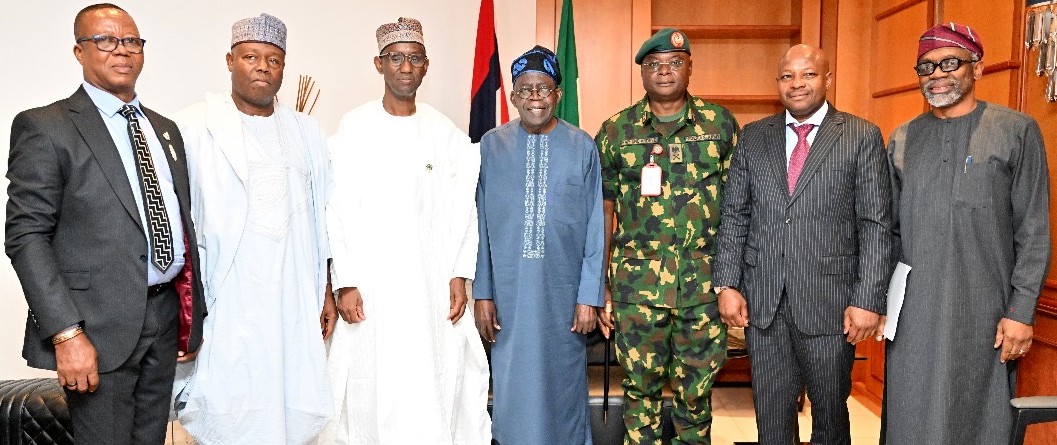
His directive follows a high-level security briefing at the State House, where service chiefs presented a grim update on the worsening violence and civilian deaths.
For over two hours behind closed doors in Abuja, Tinubu pressed military and intelligence leaders for answers—and solutions.
The President, visibly disturbed by the continued targeting of innocent lives, declared: “Enough is enough.”
National Security Adviser Nuhu Ribadu, speaking to journalists after the meeting, confirmed that the President’s orders were unequivocal.
The overhaul will focus on both tactical operations and grassroots coordination, with greater collaboration between the federal government, state governors, and local councils.
“We listened, and we took instructions from him. He gave us new directives,” Ribadu said.
“The President is insisting we work harder to restore security in the country.”
Tinubu, who remained closely engaged with national security issues throughout his recent trips to Paris and London, reportedly stayed in daily contact with his security team.
Even while abroad, he issued directives and monitored developments on the ground.
“We gave him updates on attacks, death tolls, and property damage. He was constantly in touch,” Ribadu explained. “Today’s briefing was detailed and exhaustive.”
The President had earlier directed officials to visit the most affected regions—Borno, Benue, and Plateau—and meet directly with local political leaders.
Ribadu confirmed those visits took place and said feedback from local authorities was conveyed during the latest briefing.
In a move that signals a shift towards community-level engagement, Tinubu emphasised the need for integrated responses involving traditional authorities, local councils, and state governments.
He called for an end to top-heavy approaches, urging more grassroots collaboration to address the root causes of violence and insecurity.
“The issue of insecurity is not just at the higher levels,” Ribadu said.
“It involves the subunits—the people directly with the communities. The President directed that we work more closely with governors.”
The National Security Adviser described Tinubu as “very worried and concerned” during the meeting, adding that the President’s stance is firm: restore peace and protect lives.
Security chiefs confirmed that perpetrators often use improvised explosive devices (IEDs) and exploit ungoverned areas to launch attacks.
These tactics, they warned, are deliberately designed to inflict harm on vulnerable populations.