By Maryam Adebiyi, JKNewsMedia Reporter
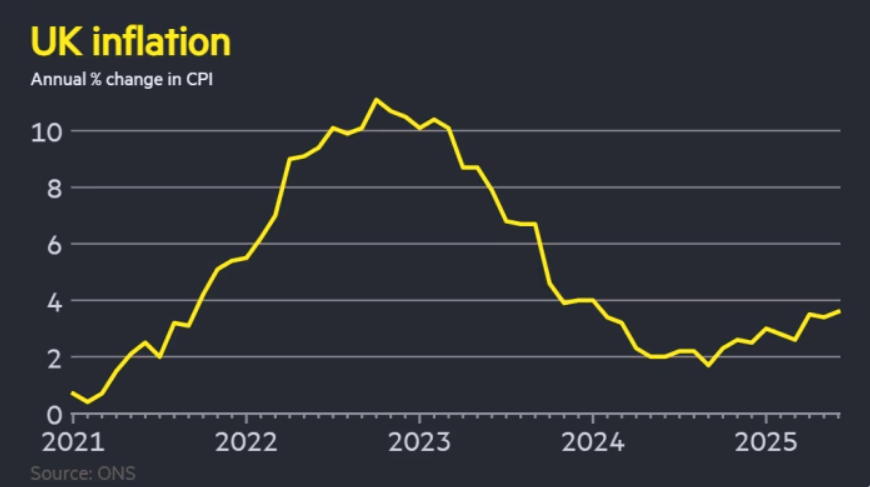
UNEXPECTED PRICE rises in June pushed Britain’s annual inflation to 3.6percent, the highest in 18 months, posing a new challenge for the Bank of England as it weighs interest rate cuts against lingering cost pressures in the economy.
The latest figures from the Office for National Statistics (OFS) show consumer prices rose faster than analysts predicted, outpacing the 3.4 percent rate recorded in May.
Forecasts had anticipated no change, but instead, prices accelerated, fuelled by higher airfares, rising food costs, and more modest declines in petrol prices than seen a year earlier, OFS reveals.
Transport was the largest contributor to the inflation surge.
Petrol and diesel remained cheaper than last year but posted smaller month-on-month falls than in June 2024.
Air travel saw the sharpest June increase since 2018, particularly on European and long-haul routes, while international rail ticket prices also climbed.
Food inflation rose to 4.5percent annually, the highest since February 2024.
OFS reveals that shoppers paid more for essential items such as bread, meat, dairy and coffee.
Industry sources also attributed the rises to increased energy and labour costs, along with global supply issues.
Clothing also became more expensive, with retailers passing on recent hikes in national insurance contributions and the minimum wage.
UK economic analysts said this may reflect companies adjusting to new labour and tax pressures following Chancellor Rachel Reeves’ Spring Budget measures.
Also, the price of housing and household services remained stubborn, with private rents increasing by 6.7 per cent in the year to May.
Though slightly slower than the previous month, housing costs continued to exert substantial pressure on household budgets, especially among younger renters.
Core inflation, which strips out volatile food and energy costs, rose to 3.7percent, up from 3.5percent in May.
Services inflation, a critical metric for policymakers, remained unchanged at 4.7percent, exceeding expectations and underlining persistent domestic price pressures.
The inflation uptick came days after data revealed the UK economy contracted in May, the second consecutive month of decline.
The slowdown is also said to have followed strong growth in the first quarter, with firms facing tighter margins amid tax increases and uncertainty driven by US President Donald Trump’s ongoing trade war.
Despite the setback, market expectations still point to a likely rate cut at the bank’s next policy meeting on August 7.
Reports reveal that traders continue to price in two quarter-point cuts by year-end, although the stronger-than-expected inflation reading has prompted renewed calls for caution.
Furthermore, interest rate-sensitive two-year gilt yields rose slightly to 3.86percent, while sterling gained 0.2percent against the dollar, trading at $1.340.
The Bank of England’s Monetary Policy Committee, which targets a 2percent inflation rate, has reduced borrowing costs four times since August 2024.
In its June meeting, the MPC voted 6-3 to hold rates steady at 4.25percent following a May cut, reflecting divisions among members on the persistence of price growth.
Economists remain divided over the pace of further monetary easing.
Some argue the sustained pressure on services and core inflation calls for prudence, while others point to weakening GDP and labour market signals as justification for continued loosening.
Wage growth, which has averaged 5.2percent annually, may offer some protection to household incomes, yet many lower-income workers remain exposed to rising daily expenses.
Renters, commuters, and shoppers continue to feel the squeeze.
The Office for National Statistics also reported that house prices rose 3.9percent in the year to May, while average private rental costs kept climbing, though at a slightly reduced pace.
Economists anticipate inflation could rise further over the summer, potentially peaking at 4percent in September, before gradually falling as energy prices ease.
Still, core and services inflation are expected to remain “sticky”, complicating the Bank’s outlook.
Inflation has eased significantly from its 11.1percent peak in October 2022, driven by post-pandemic supply shocks and soaring energy costs following Russia’s invasion of Ukraine.
Yet at 3.6percent, OFS report says it remains well above target, signalling the challenge facing policymakers seeking to balance stability with relief for households.