By Joke Kujenya
ROUTINE BLOOD pressure checks can produce different results depending on how a patient’s arm is positioned, with scientists at Johns Hopkins reporting that small changes may shift readings into higher risk categories.
JKNewsMedia.com reports that a crossover trial found that patients who allow their arm to hang unsupported may record readings up to 7 millimetres of mercury higher than those whose arm rests on an exam room desk.
The study also stated that such a difference can move a reading from elevated to stage 2 levels.
Tammy Brady, MD, PhD, of the Johns Hopkins University School of Medicine led the investigation, which recreated three postures commonly seen in clinics.
Report say that researchers designed the study to reflect routine checkup conditions by asking participants to walk for two minutes before each reading, followed by five minutes of rest in a seated position with back and feet supported.
Each participant underwent four rounds of triplicate measurements using different arm positions, with the desk supported posture repeated at the end to account for natural changes in blood pressure.
The study involved 133 volunteers in Baltimore aged between 18 and 80, rotating through desk support, lap rest and side dangling positions.
Using automated cuffs, researchers recorded that lap supported arms produced readings averaging 3.9 mmHg higher systolic and 4 mmHg higher diastolic than the desk standard, while unsupported arms reached 6.5 mmHg and 4.4 mmHg above baseline.
Also, Sherry Liu, M.H.S., said, “If you are consistently measuring blood pressure with an unsupported arm, and that gives you an overestimated BP of 6.5 mmHg, that’s a potential difference between a systolic BP of 123 and 130.”
The findings showed consistent patterns across age groups and among individuals with and without obesity, as well as those already diagnosed with high blood pressure.
The American Heart Association recommends that patients sit with back supported, feet flat and arm resting on a firm surface aligned with the right atrium during measurement.
The study noted that in busy clinical settings, such positioning is not always followed, with some patients holding their arms or sitting without proper support during checks.
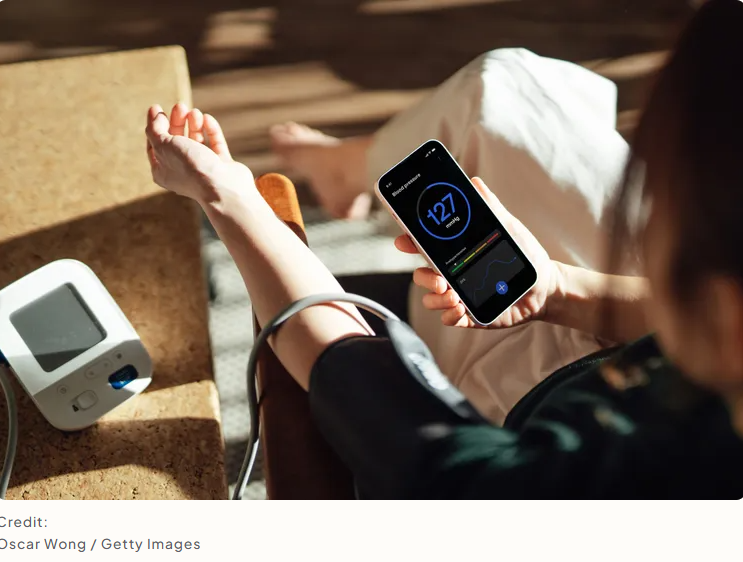
JKNewsMedia.com reports that the researchers also highlighted that home monitoring may be affected by table height, suggesting that adjustments such as supporting the elbow or raising the device can improve accuracy.
They further noted that cuff size can influence readings, with narrow cuffs increasing measurements by 5 to 10 mmHg, affecting about 12 percent of Black Americans with larger arm circumference.
Brady’s team plans to test whether a reminder on device screens to rest the arm on a table can improve measurement practices, and whether wrist cuffs with position sensors reduce errors.
Published in JAMA Internal Medicine.
10 Common Mistakes Made At Home
- Using the wrong size cuff or putting it on wrong
- Taking your blood pressure over your clothes
- Putting your arm in the wrong position
- Taking readings after drinking, smoking, or eating
- Forgetting to rest and relax before taking your blood pressure
- Failing to empty your bladder before taking a reading
- Talking during the measurement
- Moving around during the blood pressure reading
- Crossing your legs or having poor posture
- Taking only one reading
Any inaccurate blood pressure reading by as little as 5 mmHg can completely change the trajectory of your blood pressure status and management. In other words, you run the risk of either being prescribed medication you don’t need or leaving hypertension untreated. Here are some common mistakes to avoid.
Medically reviewed by Angela Ryan Lee, MD
—–
Do you have a news tip for JKNewsMedia.com? Please copy and email us at jkmediapress@gmail.com.