By Joke Kujenya,
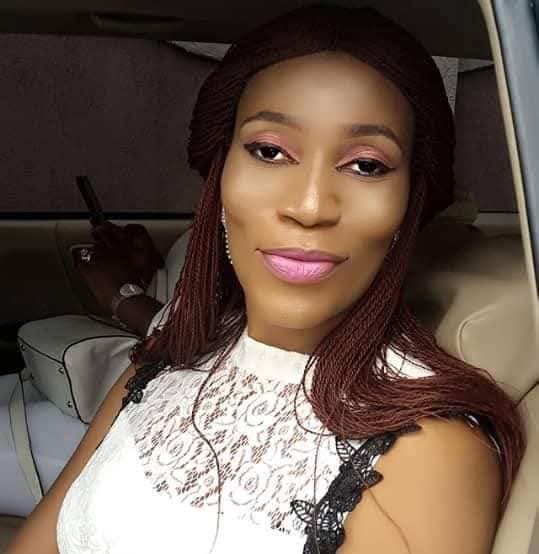
HER BREAST lump seemed easy to dismiss, but Benita Egone’s procrastination in seeking treatment would eventually expose the devastating cost of prolonged waiting, as the disease advanced within her body and brought years of treatment, huge financial strain and the loss of a breast.
JKNewsMedia.com reports that the mom, certified accountant, former model said she first noticed the lump on the left side of her breast in 2020.
But her previous experience with breast lumps made her less alarmed by the new development.
She said she only became more concerned after noticing and apparent dimpling around the affected area whist a friend had sternly urged her to seek medical attention, but she held back thinking it was nothing alarming.
Jolted into reality, her mom’s demise in May 2020 eventually prompted her to get checked.
By August of the same year, the investigations had taken her to a surgeon, who examined the lump and raised the possibility of cancer.
Promptly, he recommended a biopsy to confirm the diagnosis and determine the appropriate course of treatment.
Egone recounts that this diagnosis came as a crushing blow to her as she described the moment as devastating and difficult to process while sharing her experience on a virtual with fellows of the 2026 Naija Cancer Watch Fellowship on Wednesday, August 19.
“It was devastating. It was terrible. It was bad,” she recalled.
Stories she had heard about chemotherapy and the difficulties associated with cancer treatment further deepened her apprehension, influencing the choices she made about how to proceed with her care.
However, rather than immediately proceeding with the recommended treatment, she explored other options and supplements.
But on the benefit of hindsight, Egone said she now believes that delay had serious consequences.
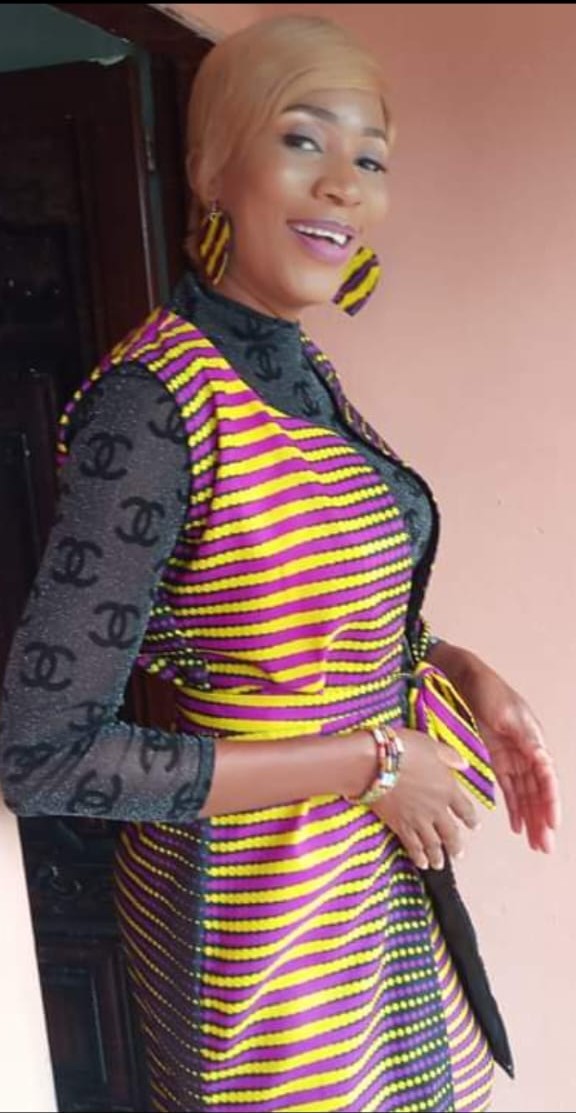
To the listening fellows, she bemoaned: “I would have gone for my treatment earlier. I should have been able to trust them to start the process. It wouldn’t have gotten to stage four. That’s what I want to say. I should have done the right thing,”
Sadly, the disease did not remain at its initial stage. Egone received a more advanced cancer diagnosis in 2022, and further medical assessment the following year, including a CT-scan in 2023, confirmed that it had spread beyond the breast to her liver and bones.
“At this the stage, it’s a matter of life and death. But nobody should get to that stage. If you’ve been diagnosed early enough to start your treatment, do the needful,” Egone recalled.
She also narrated how the illness brought physical, emotional and financial challenges as well as how she endured severe pain, loss of appetite and other treatment side effects, while the cost of treatment, medication, accommodation, transportation and other expenses accumulated into tens of millions of naira, amongst others.
Egone said one of her most difficult experiences was living with a persistent sore on her breast. She said it later affected her confidence and made her uncomfortable around other people given the dense of odour oozing out of her body.
“Having to move around with a sore… that was a big challenge. It got me embarrassed. Like, I wouldn’t want to hug persons because I would believe maybe the odour from the sore would get to them.” she further recounted.
On the larger scale however, she said family support helped her through the difficult period, with one of her younger brothers becoming a major source of assistance.
“He was a big support system,” Egone said. “He was a big impact in my journey. I know God sent me a brother indeed.”
She also recalled a period when the strain of her treatment, coupled with challenges involving her son, became too much to bear, leaving her hopeless, unable to eat for days and withdrawn from those around her.
“I actually told God to take my life,” she also said, adding that she later woke up and decided to return to the hospital, realizing she was still alive and promptly, “I took myself to the hospital. I said, God didn’t want me to die,” she said laughing at the virtual session.
Egone said she eventually resumed her treatment and said her perception of chemotherapy changed after she experienced cancer care with medical guidance and support.
Her decision to explore herbal treatment also came with serious consequences. After being introduced to the remedy, she stopped taking her prescribed medication for about a month and later developed complications, including prolonged bleeding.
She said she quickly returned to her oncologist and resumed her medication.
Her recovery did not end the challenges. She continues to take medication and has had to adjust to life after losing a breast.
Before obtaining a prosthesis, she improvised with old socks.
“I would take some of my old socks, put them together, put them on my breast,” she said.
She eventually obtained a prosthetic breast and said it restored some of her comfort and confidence.
“It’s not easy but I was able to get a prosthesis breast. I’m more comfortable. I’m more okay. I don’t need to adjust,” she said.
The experience has since become the foundation of her advocacy work. After completing treatment, Egone began supporting and mentoring people living with cancer while encouraging early diagnosis and treatment.
“I told myself, I think God saved my life for a reason,” she said.
She now tells people facing possible cancer symptoms not to allow fear to postpone medical attention.
“If you need to go for a diagnosis now, go for your diagnosis, do your prognosis, start your treatment. You will not spend as much as I spent,” she advised.
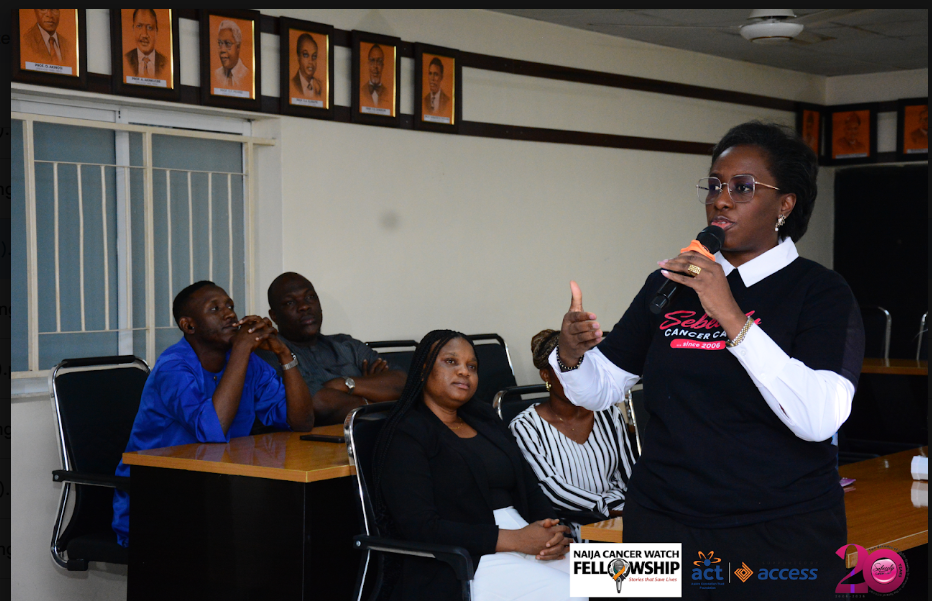
Oncologist Calls for Dedicated Treatment Centres
Egone’s appeal came alongside a call by cancer specialist Dr Omolola Salako, the ‘People’s Oncologist;’ for increased private investment in cancer treatment infrastructure.
Salako, a Clinical and Radiation Oncologist at the College of Medicine, Idi-Araba, Lagos, said wealthy individuals and corporate organisations could help close Nigeria’s cancer treatment gap by investing in specialised treatment centres and critical equipment.
She made the call during a virtual session with the 2026 Naija Cancer Watch Fellowship, a health journalism programme organised by her non-governmental organisation (NGO) Sebeccly Cancer Care to equip journalists with skills for accurate and evidence-based cancer reporting.
Salako identified the limited availability of radiotherapy centres as a major obstacle to cancer treatment, noting that only about 18 states have such facilities.
She urged philanthropists and corporate organisations to consider establishing cancer centres, especially in states where patients struggle to access specialised care.
“Our corporate sector, many people can gift cancer centres with radiotherapy machines. To set up a radiotherapy centre, you need $15 million,” she submitted.
She also said wealthy Nigerians could contribute to cancer care without waiting for government intervention.
“Every millionaire or billionaire can set up a cancer centre in its state. We don’t have to wait for the government. We are not saying because you are a billionaire you must set it up, but we need to direct attention to where they can consider,” she said.
According to Salako, increased investment could reduce the distances patients travel for specialised treatment and ease pressure on existing facilities.
She also pointed to stigma and misinformation as continuing challenges for cancer survivors, saying many remain silent because they fear rejection and discrimination.
“A lot of cancer survivors are silent. For every one survivor that we have at Sebeccly, there are a hundred more survivors that don’t want to share their stories,” Salako said.
She urged journalists to approach cancer reporting with empathy and pay attention to the emotional and psychological experiences of patients and survivors.
“Apply the principle of empathy when interviewing persons living with cancer. Empathy means that you understand what they are passing through but you are not to absorb it,” she advised.
Salako also rejected the perception that cancer automatically means death, saying more people are surviving the disease.
“Many people have heard that cancer is a death sentence and that is a false narrative because more people are surviving cancer,” she said.
The Oncologist passionately stressed that cancer is not contagious and urged the media to promote early detection, treatment and survivorship rather than fear and stigma.
Back to the survivor, Egone said she has returned to work, social activities and exercise and now uses her experience to encourage others.
“I’m back to my normal life,” she said.
She then sent a clear message to people currently facing cancer: “Brace yourself up. Have faith. Trust God. Act before fear sets in or delay make treatment more difficult.
“Cancer is not a death sentence,” she reiterated.
—