By Joke Kujenya
NIGERIA IS once again counting its dead.
Across several communities, bandits and terrorists have unleashed fresh waves of violence, leaving families shattered, villages deserted, and citizens wondering whether anybody is truly in charge of their safety.
This analysis is not written from the standpoint of a security expert, but as a concerned citizen attempting to draw attention to issues that may not be receiving adequate focus in official discussions.
As reports continue to emerge about recent military operations targeting the Islamic State West Africa Province (ISWAP), including the reported invasion of a harem linked to the group’s second-in-command, an uncomfortable question demands an answer.
Did the Nigerian government, the supporting United States Soldiers, and Nigeria military genuinely expect that such a significant operation would not trigger retaliation? This is just the analyst’s layman assumption, not insinuating anything.
This is not a defence of terrorists or terrorism either. It is not an argument against military action.
Criminals and extremists must be squarely confronted and defeated.
But warfare has consequences.
History has repeatedly shown that when terrorist groups suffer major losses, they often respond with revenge attacks designed to demonstrate that they remain capable of causing fear and destruction.
That is one of the oldest tactics in the playbook of insurgent groups around the world.
If military planners knew the operation could provoke retaliation, what measures were put in place to protect vulnerable communities afterwards?
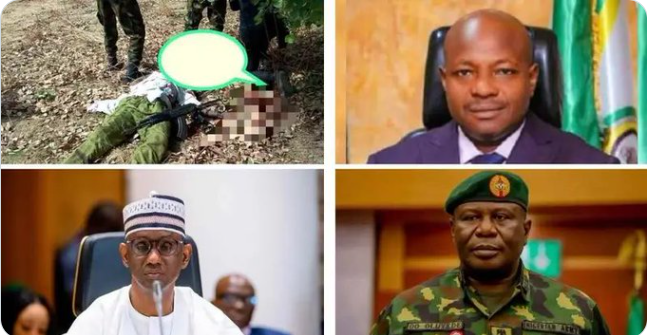
Perhaps, the nation’s Chief Security Officer, Nuhu Ribadu and his concerned partners could help the nation further here.
He’s been very loudly silent amidst all these recent attacks breaking almost daily since May 15, 2026.
Why do ordinary Nigerians continue to pay the highest price whenever major security operations take place?
Why are villages still being attacked almost at will?
Why are farmers still afraid to go to their fields?
Why are citizens still sleeping with one eye open?
These are questions the Federal Government owes Nigerians answers to.
For too long, government officials have celebrated military successes while grieving communities are left to bury their dead.
Tactical victories on the battlefield mean little to families who continue to lose loved ones’ days or weeks later. Not even government’s bags of rice and other food items could placate their grieving souls.
Security is not only about launching successful operations.
It is also about anticipating the enemy’s next move and preventing innocent people from becoming collateral victims of retaliation.
The duty of government is simple and clear: protect citizens’ lives!
That duty cannot be postponed.
That duty cannot be explained away.
That duty cannot be outsourced.
The Federal Government, military authorities, intelligence agencies and security chiefs must urgently wake up to their responsibilities.
Nigerians should not have to live in fear because terrorists are presumably seeking revenge for losses suffered in US-Nigeria military operations. So, it seems or not.
If there is intelligence suggesting retaliation attacks, communities must be protected before the attacks happen, not after.
If additional troops are needed, deploy them.
If surveillance must be increased, increase it.
If local intelligence networks need strengthening, strengthen them.
Every life lost because of preventable security failures is one life too many.
There is also an international dimension to this crisis.
The United States has recently deepened military cooperation with Nigeria in the fight against terrorism.
If Washington is committed to helping Nigeria defeat extremist groups, then support must go beyond symbolism.
President Donald Trump must urgently assist Nigeria with intelligence-sharing, surveillance technology, training and counterterrorism resources before the situation deteriorates further.
Nigeria’s security crisis is no longer a local problem.
Terrorism thrives when governments fail to stay ahead of evolving threats.
A renewed and stronger partnership between Nigeria and the United States could help prevent more bloodshed and save innocent lives.
The time for complacency has passed.
The time for excuses has passed.
Nigerians do not need more promises.
They need protection.
And we need it now!!!
—