By JKNewsMedia Reporter
NIGERIA’s OIL sector has been handed a significant financial reset, with approval secured for the cancellation of $1.42 billion and N5.57 trillion in debts owed by the Nigerian National Petroleum Company (NNPC) Limited to the federal government, signalling a push to stabilise the company’s finances and tighten transparency in the industry.
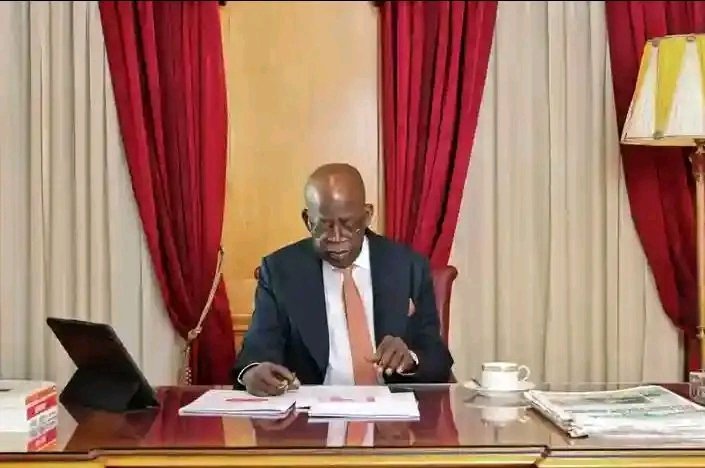
President Bola Tinubu disclosed the decision on Monday, saying the approval comes against the backdrop of mounting fiscal pressures facing Africa’s largest oil producer, including weak government revenues and rising public debt.
He also noted that the write-off is actually tied to broader reforms of NNPC as the government prepares the company for potential divestments in oil and gas assets.
Details of the approval were provided by the Nigerian Upstream Petroleum Regulatory Commission (NUPRC), which said the decision was finalised at the November Federal Accounts Allocation Committee (FAAC) meeting held last week.
According to the regulator, the outcome followed recommendations by a stakeholder reconciliation panel set up to review and align NNPC’s outstanding financial obligations to the Federation Account.
The presidency explained that the debt cancellation covers legacy liabilities accrued up to 31 December 2024. which include obligations linked to production-sharing contracts, domestic crude supply arrangements, repayment agreements, modified carry contracts and joint venture or PSC royalty receivables.
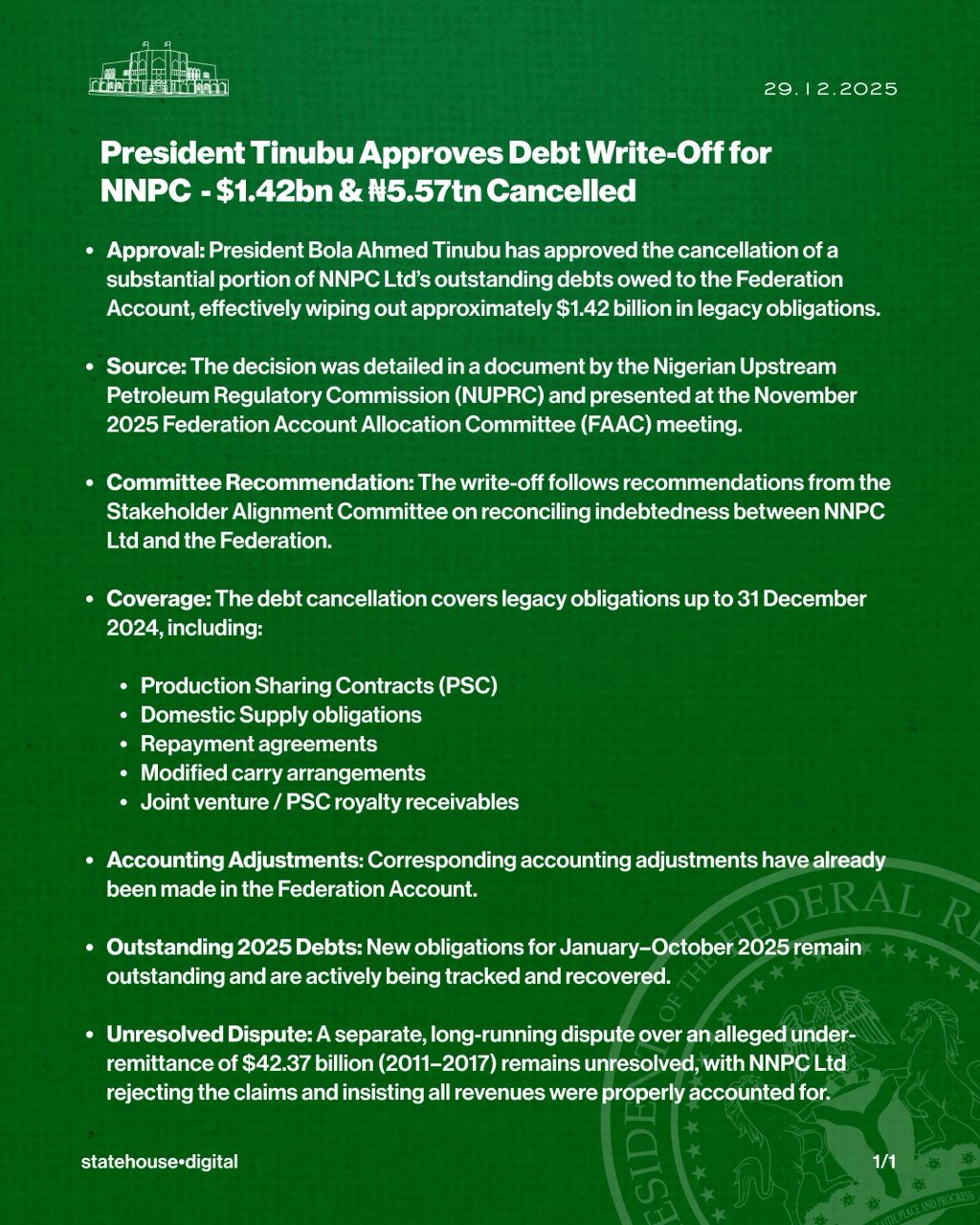
It added that corresponding accounting adjustments have already been effected in the Federation Account to reflect the write-off.
However, the government clarified that NNPC’s obligations incurred between January and October 2025 remain outstanding and are still being tracked for recovery confirming that a long-running dispute over an alleged $42.37 billion under-remittance by NNPC between 2011 and 2017 has not been resolved.
While the FG said it continues to raise concerns over the disputed sum, NNPC has consistently rejected the claim, insisting that all revenues during the period were fully and properly accounted for.
According to the presidency, the debt write-off is intended to reset fiscal relations between the government and its state-owned energy company, improve financial clarity, and reinforce accountability in a sector that remains central to Nigeria’s public finances and economic stability.