FOR MANY expectant mothers, the dream of a less painful labour is a deeply held hope. In Ibadan, Oyo State, that hope can turn into horror when childbirth is accompanied by an act of mutilation disguised as tradition. Women in labour have not only endured pain but have also been subjected to the debilitating age-old practice of Female Genital Mutilation (FGM), which has been deemed a violation of their rights but persists despite the law, reports ISAAC OLUFEMI OJO.
Till date, FGM remains a widespread practice in Oyo State, cutting across communities that cling to entrenched beliefs. The practice also continues in defiance of the Violence Against Persons (Prohibition) Act (VAPP), which was domesticated in Oyo in 2021, and the Violence Against Women Law 2016. Both explicitly outlaw FGM, prescribing fines and prison terms. Yet the law, often described as a landmark, has proven insufficient in stamping out the practice.
A Tradition Passed Through Generations
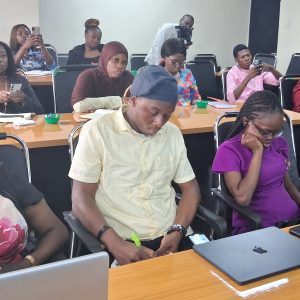
During an outreach programme organised by United Nations Children’s Fund (UNICEF) partner trailblazer, a traditional birth attendant, Mrs. Modupe Bello from Olomi/Omiyale in Egbeda Ona Ara Local Government, shared the harrowing experience of an expectant woman, while she was an apprentice with the reporter.
She described how her mentor, known as Iya Agbebi(Traditional birth attendant), performed FGM on an unnamed woman who lingered in labour though she had previously endured three failed deliveries. Without the woman’s consent, her husband and the traditional midwife agreed that circumcision would ease childbirth.
She said: “I remember Iya Agbebi telling the woman to be prepared as what she wanted to do will help her avoid a repeat of her past ordeals.”
Bello added. “This woman was cut. She screamed, holding the table so tight. Minutes later, she gave birth to her baby.”
In such instances, Bello explained that the justification given was that a woman’s clitoris usually labelled Idan in the Yoruba parlance often obstructs childbirth. So, the belief is that circumcision was necessary to remove the barrier.

For Bello, she said watching women in pains was usually harrowing moments that exposed how tradition overpowers both consent and science.
She said her mentor would always insist that cutting was a “must” in Yoruba custom, despite overwhelming medical evidence of its dangers.
However, According to WHO, The practice has no health benefits for girls and women and can result in severe bleeding and problems urinating, and later cysts, menstrual difficulties, infections, as well as complications in childbirth and increased risk of newborn deaths.
Law Against Reality
As a matter of fact, the VAPP Act oyo-state-violence-against-persons-prohibition and Violence-Against-Women-Law-Oyo-State-2016criminalises female genital mutilation. Section 6 of the act even prescribes up to four years’ imprisonment or a fine of ₦200,000 for offenders, while attempted FGM carries a two-year sentence or a fine of ₦100,000.
Also, aiding or inciting FGM attracts the same penalty just as the Oyo State Violence Against Women Law 2016 equally provides similar sanctions.
Sadly, enforcement lags
A visit by this reporter to the Family Court in Ibadan revealed that of 55 gender-related cases recorded between January and August 2025, none was related to FGM.
Rather, survivors and families either conceal the practice or abandon cases under pressure, leaving the law on paper while harmful traditions flourish.
Survivors Share Ordeals
For survivors, the scars of FGM last a lifetime as they narrated to the reporter.
Speaking, Mrs. Blessing (surname withheld), a mother, said” “Without mincing words, FGM circumcision on me has deprived me of sexual pleasure in addition to causing complications in childbirth.
“Yes, I’m a survivor of FGM but when I consider the side effects, I remain unhappy because I felt my parents did something very harmful to me rather than good,” she said.
“By the time I got married, sex became painful instead of being pleasurable. I even lost a baby because my cervix could not open during delivery, and I had to undergo a caesarean section (CS).”
At this point, her voice dropped as she held back tears, and then added, “I even lost another child. So, with my experience I boldly say that FGM is not a good idea for any woman no matter what the excuse could be.”
This reporter’s interactions with other survivors also reveal how “circumcisers” who now dress in somewhat corporate, currently go around, knocking on doors in Ibadan’s outskirts to offer their services covertly in their bid to avoiding arrest.
They added that though the practice has shifted underground, it persists unhampered.
Oyo Failed Institution
At the Abiyamo Sexual Assault Referral Centre in Ibadan, the promise of protection and care for survivors of sexual and gender-based violence (SGBV), particularly Female Genital Mutilation (FGM), contrasts sharply with the reality on the ground.

Conceived as a one-stop shop for survivors and offering confidential counselling, rehabilitation, medical support, and legal referrals, the centre, located within the Jericho Nursing Home complex is practically seen as struggling to fulfill its mandate.
When the reporter first visited on September 15 at about 4.00pm, the gatekeeper, with an unfriendly mien and refused to give his name, said the officer-in-charge had closed for the day and advised a return the next morning.
On a follow-up visit the next day, entry was delayed as the same gatekeeper questioned the purpose of the visit, only granting access after the reporter insisted that an appointment had been booked.
Now on the inside, a social worker, who also wouldn’t give her name, admitted she splits her time between the nursing home and the referral centre, a situation that further affirms the chronic understaffing.
The administrative head—a nurse who spoke on condition of anonymity, confirmed that there had only been “a few rape cases” that had been reported since inception. However, none was related to FGM.
She added that not a single SGBV case had also been attended to in this year 2025, though a few assault cases were recorded in previous years.
“The truth is that people don’t even know this place exists. Thank God you are here; maybe you would be able to help us escalate the availability of the centre,” she said and quickly walked away to stop the reporter from asking her any further question.
Handed over to the Oyo State Government by the Association for Reproductive and Family Health (ARFH) on 15 September 2021, the Centre’s official functions, Rehabilitation, counseling, legal referrals, and medical consultations, remain more theoretical than operational.
Reality currently on ground is that survivors requiring medical attention must wait for a standby doctor to be called in; revealing how little emergency response capacity actually exists. So, now, what was envisioned as a safe haven for vulnerable women and girls now risks becoming a symbol of institutional weakness: the facility is open in name but closed in practice.
In a state grappling with widespread domestic violence, rape, and harmful traditional practices, the near-desolate Abiyamo Centre illustrates how weak institutions leave survivors without the urgent support they deserve as evidenced by what the reporter witnessed on his visit.
Enforcement Officials’ Struggles
When asked by the reporter, the Oyo State Police Spokesperson, Superintendent Wale Oshifeso, was visibly cautious when asked about FGM and offender arrests.
However, he later sent a WhatsApp response that reads: “In instances of Female Genital Mutilation (FGM), it can be challenging for victims to step forward due to susceptibility, societal stigma, or lack of awareness of available complaint channels. The media must play its significant role in increasing awareness, in collaboration with relevant NGOs.”
In his response, the Gender Focal Officer for Anti-Human Trafficking and Anti-Child Protection Unit at the Nigeria Security and Civil Defence Corps (NSCDC), Oyo State Command, Afe Olurotimi, simply identified public reluctance and the government’s poor reporting mechanisms as key obstacles to arrest and prosecution.
He queried: “People are still reluctant to report cases. Law enforcement and the judiciary are ready to work and you cannot report an FGM case at a police station or the Civil Defence office and it won’t get to court. The real issue is: what systems are in place to make such reports easier?”
He also mentioned that while the Abiyamo sexual referral center would be ideal for those uncomfortable reporting to the police/NSCDC, the facility is short-staffed and lacks adequately trained personnel despite being well-equipped.
According to the Afe, reporting FGM is straightforward: “a willing observer or a non-consenting parent can report the case to the police’s Gender department or the NSCDC, who will then handle it”. In a scenario of an already complicated FGM case, “the survivor’s parent will need to present a medical report at the point of report and other information needed for the law enforcement agency to establish the case for action.
However, in a non-complicated scenario of mutilation, the parent or the reporter only needs to show up with valid information for actions to be taken,” he said
When asked whether the command had recently prosecuted any FGM case, he referred to the earlier case of the two-year-old girl which was ultimately struck out after the girl’s mother stopped pursuing it. Throwing up his hands into the air, he said to the reporter, “you see what we’re talking about?”
He equally added that the government has failed to provide alternative livelihoods for traditional circumcisers.
“You are taking the knife away from me and not giving me anything better to replace killer object,” she said, explaining why some practitioners have returned to FGM secretly.
Also, the Nigerian Bar Association (NBA), Oyo State chapter chairman, Ibrahim Lawal, admitted that its hands are tied until cases are formally reported.
“You know it is cultural and prosecution can only follow when cases are duly brought forward backed with all proven details and facts. Until then, we wait,” he said.
Culture And Law Disparities
Diversely in Ibadan and Eruwa communities, residents strongly defended the practice as part of identity.
A trader, Mrs. Buraima, insisted she circumcised her daughters. “If a girl is circumcised, she will not be wayward,” she argued.
Another resident, Mr. Rauf Ajibola queried, “Is the government the parent of the girl? If I want it for my girls, I will do it.”
Traditional circumcisers further reinforced these views.
An elderly man in Ibadan called Baba Oloola dismissed the VAPP Act as ‘baseless’ claiming uncircumcised women risk promiscuity.
He cited distorted religious reasoning, although Islamic leader, Imam Abdul wahab Asipa later clarified that female circumcision is neither compulsory nor prescribed, he claimed.
“That is a slap on Yoruba tradition,” as he insisted that circumcision prevents promiscuity and claimed it is a religious obligation.
“The law to eradicate girl child mutilation is baseless. They have been trying to cancel it for long, but they cannot. I am educated and know what I am doing. Any woman who is not circumcised will end up promiscuous,” he argued.
Yet, not all hold the same view as Mama Olorisha, a former circumciser who later abandoned the practice earlier this year after attending an outreach organised by Trailblazer Initiative in collaboration with UNICEF, said she had come to learn more about the harm caused by FGM practice.
“I used to circumcise girls at birth, but I realised it falls short of best maternity practice. Many of the circumcised girls even became more promiscuous. I have been following different teachings online, and at this point, I am ready to give up the harmful act,” she told the reporter.
In the same vein, Pastor Bamidele Akanle of the Redeemed Christian Church of God (RCCG) bluntly dismissed claims that the Bible supports female circumcision, stressing that no scripture permits or commands the practice.
He said that’s why the church would continue to raise awareness on the dangers of FGM and sensitize members of the public against it.
“Hopefully, our people, especially those still rooted in this tradition within the church, will begin to understand. I know nobody talks about it, even when they do it, but we will continue to raise awareness,” he told the reporter.
Justice System Failing Survivors
This grim reality also stands in stark contrast to the widespread cases of gender-based violence across Oyo State.
In fact, one haunting example is the high-profile case of a two-year-old girl, an ordeal that laid bare both the brutality of harmful traditional practices and the deep fractures within Nigeria’s justice system.
Speaking on the incident, Mrs. Dupe Awosenusi, pioneer coordinator of Oyo’s SGBV response team, recalled how the girl’s paternal grandmother tricked the child’s mother into releasing her for a weekend visit, only to have the toddler mutilated in Oyo town.
She said it was later learned that the procedure was performed with crude instruments by a local cutter, with the girl’s great-grandmother present.
Dubbed a ‘crime’ by the child’s mom, Awosenusi said it was discovered when the girl returned home ill and doctors confirmed she had been mutilated.
And strongly determined to secure justice, the little girl’s mom pressed charges.
Yet despite initial arrests and efforts to prosecute, the case collapsed under family pressure.
Court hearings were repeatedly adjourned, and eventually, the child’s mom, facing intimidation from her husband’s family, stopped attending. The case was eventually struck out before it could set a legal precedent against FGM in the region.
“It could have been a locus classicus on FGM in Nigeria,” Awosenusi said. “But pressure on the mother was so much . we eventually could not prosecute the case to a logical conclusion before it was struck out.”
Evidently, the story of the two-year-old survivor reflects broader failures surrounding SGBV in Oyo. While the Abiyamo Centre exists on paper, its impact remains negligible.
Survivors currently face not only trauma and stigma, but also institutions too weak to protect them or secure justice.
To buttress this, the reporter obtained evidence from the Family Court in Ibadan, backed by a formal charge sheet filed in August 2022, showing the recurrence of SGBV and FGM. Charge No. MEC/85/22 listed three defendants—Rasaki Ogunbode (51), Zainab Bello (54), and Sheu Mariam (85)—accused of conspiring to mutilate a two-year-old girl.
In Count One, the reporter saw that they were charged with conspiracy to commit female genital mutilation, contrary to Section 516 of the Criminal Code of Oyo State.
In Count Two, they were accused of unlawfully removing parts of the child’s genital organ, an offence under Section 10(1) and punishable by Section 10(2) of the Violence Against Persons (Prohibition) Law of Oyo State, 2020.
However, despite clear legal backing, multiple adjournments, family pressure, and institutional weakness led to the case collapsing before judgment was delivered
Awosenusi lamented that delays, adjournments, and intimidation stall justice, leaving perpetrators unpunished.
“You know so many things happen in courts that People do not know and they’re like, the court process is too slow. fine, It could be slow, but then sometimes when you are ready to go on the court may not sit” she said.
Awosenusi moreover attributed enforcement failures, weak survivor-centred responses, and fragmented collaboration as factors stalling justice system as seen over the years.
Legislative Arm Speaks on Weak Enforcement
Speaking on the failure of institutions to enforce laws safeguarding girls from harmful practices, Oyo State House of Assembly the two-term Speaker and Chairman of the Conference of Speakers of State Legislatures of Nigeria, Adebo Ogundoyin, lamented the persistent gap between legislation and enforcement.
“It is quite disappointing that despite passing laws to protect our citizens, implementation remains weak. Too often, these laws are not properly enforced due to a lack of political will or failure of security operatives,” he said.
On the specific issue of FGM, Ogundoyin noted: “The Violence Against Persons Law already captures genital mutilation as a crime. We strongly frown against such practices, especially when children have no say in their lives.”
He added that recognising education and awareness as major bottlenecks to enforcement, the Assembly is developing a digital platform to make state laws easily accessible to citizens.
“The best we can do is to showcase and make laws available for citizens interested in knowing their rights and powers. This will also benefit the judiciary by improving access to the laws of the state,” he said.
However, his remarks exposed a recurring pattern in which lawmakers pass laws while enforcement responsibility is shifted to others.
“It is up to security operatives and the justice system to ensure these laws are implemented and adhered to by citizens of Oyo State,” he added.
The Numbers Tell a Different Story
Far from declining, FGM prevalence in Oyo remains high. UNICEF reported rates above 30 percent, MICS 2021. In a 2024 academic study done by International journal of Health and Medical Information Prevalence of FGM, the survey conducted with 1137 put the figure at nearly half of women and girls — 49.6 per cent.
Officials admit the crisis. At a recent multi-sectoral meeting, Oyo’s Commissioner for Information Prince Dotun Oyelade acknowledged “weak enforcement, low reporting, weak enforcement, inadequate survivor-centred response and fragmented collaboration” as major obstacles.
He attributed the spike to low levels of reporting, weak enforcement mechanisms, inadequate survivor-centred responses and poor coordination among stakeholders.
UNICEF Child Protection Specialist, Denis Onoise, warned: “Prosecutions are rare, and communities are reluctant to report. Stronger enforcement, bigger budgets, and engagement of traditional leaders are urgently needed.”
Oyo State FGM Key Facts & Statistics
Metric fact-checks conducted by this reporter on the FGM prevalence among women aged 15–49, shows 43.2% of incidence according to UNICEF, representing almost half of women in that age group have undergone FGM. UNICEF MICS 2021
Report by HACEY Health Initiative revealed that over 50% of women of child-bearing in Oyo state had been mutilated FGM Baseline Findings Report
Further prevalence in younger girls from 0-14 years states that about 21% of them in Oyo are reported to have been cut. UNICEF MICS 2021
Then, delving into the 2024–2025 latest FGM data and facts for Oyo State indicators show prevalence among women of ages 15-49 years dropping from 63% to 31.3% over the past six years. Nigeria country profile.

Conclusively, according to Stop Cut survey by hacey.org, perpetrators breakdown in Oyo State sums up
• Traditional circumcisers: – 67%
• Healthcare practitioners: – 11.9%, and
• Traditional Birth Attendants (TBAs): – 19.7% as noted by Stop Cut study.
Calls For Change
Collectively, the stakeholders demand stronger action. Trailblazer Initiative’s Executive Director, Dr. Dare Adaramoye, called for specialised courts to handle gender-based violence cases, including issues of FGM.
Oyo State Commissioner for Women Affairs, Mrs. Toyin Balogun, told the reporter that government plans to rehabilitate circumcisers through alternative livelihoods.
“We are creating platforms to wean practitioners off this unhealthy practice,” she told this reporter.
She also announced moves towards a sexual offenders register in Oyo State, but a check of court records revealed no active FGM prosecutions this year, contradicting official claims of ongoing cases.
To ascertain the claims of ongoing FGM prosecution, the reporter spoke with the director, women affairs at the Oyo state Ministry women affairs and social inclusion, Mr. Diya Ogunjimi.
However, no definite information was given, referring the reporter to the gender unit of police, NSCDC and the Ministry of justice
Other civil society leaders echoed the call for education and cultural reorientation.
Retired National Orientation Agency (RNOA) Director, Mrs. Dolapo Dosumu, described the solution as “cultural disabuse of minds.”
Backing grassroots drive against FGM, a member of the Olubadan-in-Council, Oba Adewoyin Mobolaji, the Ekerin Olubadan of Ibadan land, said that FGM cases in the state have declined compared with previous decades.
He added that the council has intensified sensitization efforts through local chiefs and Mogajis in interior communities.
“Rome was not built in a day. FGM is reducing. We may still have traditional circumcisers here and there, but it cannot be compared with what existed 10 or 20 years ago. With time, we will not hear of it again in Yoruba land,” he assured.
Gaps in Fight Against FGM Exposed
With the reported experiences of survivors like Blessing and a two-year-old girl recently mutilated, deep scars left on its victims by FGM suturing are highlighted as it continues to leave in Oyo State.
Officials and concerned individual spoken with noted that while laws exist, enforcement falters under the weight of tradition, silence and systemic weakness.
Stakeholders then told the reporter they agree that without stronger enforcement, survivor support and cultural reorientation, the cycle of mutilation will endure.
In particular, they argue that ending FGM demands more than legislation; it requires the courage to confront entrenched beliefs, protect girls and deliver justice swiftly.
As the reporter takes his exit from the state, one strong fact remains entrenched in his heart, while the VAPP Act promised protection; for affected girls in Oyo, that promise remains broken until action matches the law.