By Jemimah Wellington, JKNewsMedia Correspondent
GLOBAL JOURNALIST, George Otumu has reflected on his childhood, education, career milestones and the challenges he faced in over three decades of investigative reporting.
He recounted how his early life in Abeokuta, Ogun State, laid the foundation for a career that later earned him international recognition.
Otumu said he was born into a large family of seven children and grew up in Abeokuta, though he hails from Esan West Local Government Area of Edo State.
He also described his childhood as beautiful, marked by warmth, discipline and a deep love for learning.
According to him, growing up in Owu, Abeokuta, gave him a strong Yoruba cultural identity.
He noted that writing became his passion early in life, with a habit of creating headlines and story ideas.
Tracing his educational path, he explained that he studied Public Administration at Edo State University, now Ambrose Alli University, Ekpoma, before training in Journalism at the Nigerian Institute of Journalism.
He later pursued Creative Writing and News Reporting at the London School of Journalism and attended the United States Institute of Diplomacy and Human Rights in Washington, DC, where he was certified as a World Human Rights Advocate.
He also holds an active licence as a member of the Foreign Press Association in New York.
Further recounting his media career, Otumu said it began in the early 1980s as an entertainment presenter on Weekend Delight, a live programme on NTA.
He said he admired journalists such as CNN’s Wolf Blitzer, Mayor Akinpelu, Dele Momodu, Kunle Bakare and Bayo Onanuga, drawing inspiration from their professionalism and impact.
However. his first recognition as a writer came when the Observer Times in Benin City published his articles, which eventually led to a breakthrough with Today’s Choice Magazine.
He later became the magazine’s first Foreign Correspondent in Ghana before joining the Daily Graphic, Ghana’s largest newspaper, where he rose to the position of Foreign Bureau Chief covering South Africa.
He noted that his career also spanned Nigerian publications including Fame Weekly Magazine, Insider Magazine, Source Magazine, National LIFE Newspaper, National Interest Newspaper, and Tempo Newspaper, where he rose through editorial positions and produced front-page stories.
Internationally, he worked with Africa Today Magazine in London under Kayode Soyinka, as well as Focus International Magazine in the United Kingdom.
He recalled that one of his biggest global scoops was the confession story of Fatai Rolling Dollars published in Africa Today, which drew worldwide attention.
He later became the pioneer Editor-in-Chief of Naija Standard Newspaper in Nigeria and eventually its Group Managing Director in the United States, overseeing the multilingual publication recognised across North America.
Speaking on top stories he covered, Otumu cited his investigative reports on children living on water in Makoko, Lagos; child labour in lithium mines between Nasarawa and Abuja; underage marriages in Nigeria and India; and organ trafficking in Libya, where he disguised himself as a migrant to document survivors’ experiences.
He described these assignments as some of the most dangerous and impactful of his career.
On his toughest moments, he recalled exposing the plight of a widow in Abuja harassed by a retired naval officer.
He said the report led to threats to his life but also earned him the United Nations Media Ambassador Award.
The story, he added, gave him access to the UN headquarters in New York with a temporary UN card.
Otumu explained that his resilience in journalism has been sustained by faith, prayer and family support.
He credited his wife, who also serves as Press Secretary and Administrative Director of their company, as a strong source of encouragement.
He emphasised that he had never blackmailed anyone in 35 years of practice and maintained that every story he published had to be factual and clean.
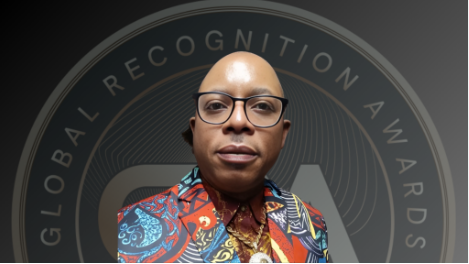
Reflecting on recent recognition, Otumu said he became the first African recipient of the 2025 Global Recognition World-Class Investigative Journalism Award, selected from 45,000 journalists across 100 countries.
He noted that he had also earned the first doctorate in Investigative Journalism as an African.
He disclosed that several multinational companies had approached him for brand ambassadorship roles, but he declined, insisting that his first commitment remained to Nigeria.
Otumu said his fulfilment comes from writing and his passion for journalism, which he described as a calling.
He added that he often spends long hours at his desk without fatigue, driven by a constant flow of ideas and headlines.
Comparing Nigeria’s image at home and abroad, he observed that the country is often portrayed negatively, overshadowing achievements.
He said America, despite high crime rates, does not amplify its challenges in the same way.
He stressed that balanced reporting is necessary, combining criticism with recognition of progress.
On leadership, Otumu remarked that President Bola Tinubu has demonstrated attentiveness to citizens’ needs through policy actions such as reducing the cost of kidney dialysis, introducing educational grants and appointing competent professionals to key positions.
He said recent security successes, including the arrest of two high-profile Al-Qaeda terrorists, had also drawn commendation from the United States and underscored Nigeria’s progress in tackling insecurity.
He then concluded that persistence, faith and integrity had guided his career, urging younger journalists to maintain resilience, accuracy and commitment to truth in their work.
FULL INTERVIEW IN PUNCH NEWSPAPER:
I Craft Headlines, Story Ideas In My Sleep – Journalist, Otumu
A JOURNALIST, Mr. George Otumu, tellsTemitope Adetunji of Punch Newspaperabout his childhood, education and toughest battles in journalism.
What was your childhood like?
I hail from Esan West Local Government Area of Edo State, but I was born in Abeokuta, Ogun State. In many ways, I consider myself a Yoruba son from Owu, Abeokuta. I speak and write Yoruba fluently, and that cultural grounding shaped much of who I am today. I was born into a large family of seven children: four girls and three boys.
My childhood was beautiful, filled with warmth, discipline, and strong values. While growing up in Abeokuta, I developed a deep love for learning and expression. Writing quickly became my passion. I often found myself creating headlines and story ideas in my head.
Would you share some insight into your educational path?
My educational journey took me far. I studied Public Administration at the then Edo State University, now Ambrose Ali University, Ekpoma, Edo State. I studied Journalism at the Nigerian Institute of Journalism.
Furthermore, I studied Creative Writing and News Reporting at the prestigious London School of Journalism and later attended the United States Institute of Diplomacy and Human Rights in Washington, DC, USA, where I became a certified World Human Rights Advocate. I also hold an active licence as a member of the Foreign Press Association in New York.
From an early age, I was outspoken and fearless in telling the truth. I admire great journalists and broadcasters like Wolf Blitzer, CNN. Watching him, I often said to myself, ‘One day, I want to do this.’ My media career began in the early 1980s as an entertainment presenter on Weekend Delight at NTA, a live television programme that gave me my first platform.
In Nigeria, I drew inspiration from trailblazers such as Mayor Akinpelu, Dele Momodu, Kunle Bakare, and Bayo Onanuga. Mayor Akinpelu especially stood out to me, always being polished, well-connected, and impactful. I looked at him and told myself, ‘I want to be like this man.’
My writing began to gain recognition when the Observer Times in Benin City, Edo State, began publishing my articles. The pay was small, but the joy of seeing my byline in print was priceless. My first breakthrough came with Today’s Choice Magazine, where I worked under the ownership of Coker Onita, with Halim Mohammed as the head then.
My colleagues were Kunle Rasheed, Tunde Moshood, Femi Davies and many more. Eventually, I became their first Foreign Correspondent in Ghana. From there, I joined Daily Graphic, Ghana’s largest newspaper, and later rose to the position of Foreign Bureau Chief, covering South Africa from Johannesburg and Pretoria.
Over the years, my career grew across Nigeria’s leading publications. I worked with Fame Weekly Magazine, Insider Magazine, Source Magazine, National LIFE Newspaper, National Interest Newspaper, and Tempo Newspaper, rising through roles from Deputy Editor, Deputy Features Editor to Deputy Head of Society Desk, consistently producing front-page stories.
I later edited The MAIL International Magazine and contributed to Sunday Vanguard’s celebrity page called ‘The Sunday People’, profiling some of Nigeria’s most influential personalities.
Internationally, I worked with Africa Today Magazine in London, under Kayode Soyinka, former London Bureau for Newswatch Magazine and Focus International Magazine in the United Kingdom. One of my biggest global scoops was breaking the controversial confession of Fatai Rolling Dollars, published in Africa Today, a story that made worldwide headlines.
Eventually, I was appointed the pioneer Editor-in-Chief for Naija Standard Newspaper in Nigeria. Later, I got promoted to be the Executive Director and Group Managing Director of the news medium in the United States, which is today recognised as Africa’s No. 1 International online newspaper in North America.
It is published in English, Spanish, Arabic, and French, and has made history as a groundbreaking platform for African journalism on the global stage.
Looking back, I see my childhood as the foundation of all this. The discipline, curiosity, and love for truth that I nurtured as a young boy in Abeokuta carried me through many stages of my career.
Before the global recognition, what were the top stories you covered as a journalist?
Some of the top stories I’ve covered include, children living on water in Makoko, Lagos — where parents and children depend on fishing and risk drowning daily just to survive, child labour in illegal mines between Nasarawa and Abuja, where underage children earn less than $3 a day, exposed to dangerous radiation from lithium mines run by foreign companies in Nigeria.
Others include stories of ‘Underage marriages in Nigeria and India’, where young girls were forced into early marriages. In India, I had to hide in different huts just to survive after exposing the story.
I must tell you that some of the other stories featured migration and organ trafficking in Libya, where I disguised myself as a Muslim and travelled by road with Nigerian migrants. I witnessed people being forced to sell kidneys and livers and saw some reduced to drinking urine to survive. It was one of the most heartbreaking experiences of my career.
What about your toughest moments?
I will not forget the painful story of a widow in Abuja who left Nigeria decades ago; she was oppressed and harassed by a retired naval officer. Her name was mentioned publicly, and I brought the story out.
I recorded it, and because of that, my life was threatened by the officer. That story drew the attention of the United Nations, and I was given the United Nations Media Ambassador Award in Nigeria.
I later went to New York, to the UN headquarters, where I was warmly welcomed because of that story. They gave me a UN card—a temporary access card. With it, I didn’t have to struggle to get in anywhere. That was huge. You see, many journalists give up when doors don’t open.
What gave you the strength to keep going in your career despite the challenges?
My strength has always come from God and the Scriptures. I pray constantly; morning, midnight, at 1 am, and again at 2 am—and my wife, who is also the Press Secretary and Administrative Director of our company, prays with me. Prayers move things spiritually when they won’t move physically.
Her unwavering support has been my backbone through the roughest times. Many times, she asked why I would risk my life for journalism, and I always told her, ‘This is my divine calling. God gave me this talent, and one day, He will ask me what I did with it—I cannot bury it.’
For 35 years in journalism, I have never blackmailed anyone. Every story I write must be clean. Persistence has carried me through; if a door doesn’t open, I keep knocking until it does. The Bible says a righteous man may fall seven times but will rise again, and even Jesus rose on the third day—there is resurrection power. That is why I never give up.
How did it feel to become the first African Journalist to win the 2025 Global Recognition World-Class Investigative Journalism Award?
Looking back, I see how God has lifted me: from earning the first doctorate in Investigative Journalism as an African, to winning international awards, to being announced as the first African recipient of the 2025 Global Recognition World-Class Investigative Journalism Award—out of 45,000 journalists in 100 countries. Sometimes I still pinch myself and ask my wife if it’s real.
My philosophy is simple: never give up, aim beyond the sky, and soar like an eagle. The eagle flies alone at the top, while other birds compete below. If you want to rise in journalism, be the eagle. Let me also add that ever since I received the Global Recognition World-Class Investigative Journalism Award, our HR in North America informed me that a few auto companies and some multinationals in Tanzania, South Africa, and Liberia had written to them to make me their brand ambassadors.
I turned down such offers since I am a Nigerian first before I became an African. Until I receive such brand ambassadorship from Nigeria, that is when I will then instruct our North American office to accept other invites from other African countries wanting to make me their brand ambassador. I love Nigeria as a patriotic Nigerian.
What truly gives you joy and fulfilment in journalism?
I don’t drink; I don’t smoke. My joy comes from the word of God and my work. Writing is my passion—I can sit at my laptop from 10 am till 7 pm without standing. Even in my sleep, I dream of headlines and story ideas. This is not just a career, for me—it is my life’s calling. Journalism makes me happy, fulfilled, and alive.
Yes, I have a doctorate, global recognition, and blessings I never imagined, but to me, all of this is proof that every step we take is being watched—not just on our continent, but across the world. That’s why I never gave up.
Having lived both in Nigeria and the United States, how do you compare the way our country is perceived at home and abroad?
Living in America, I saw how negative stories about Nigeria discouraged people from visiting. The truth is, every society has its challenges—America has one of the highest crime rates, yet its media rarely dwells on it. In Nigeria, we amplify our problems too much and downplay progress.
For instance, the government has made gains against insurgents and terrorists, and these victories deserve recognition. Constant negativity overshadows achievements and even affects international support for Africa.
Balanced journalism is important. Criticism keeps leaders alert, but constant negativity damages our image. The positivity should outweigh the negativity.
Some critics argue that leaders often hear the truth but fail to act. In your view, what practical steps should the President take to ensure words translate into real change?
President Bola Ahmed Tinubu is different. He listens to people’s pains and takes practical steps. Recently, he appointed Louis Odion, a seasoned journalist with advanced degrees in war studies and international law, to head a federal consumer protection agency. This shows the president values competence and innovation.
Tinubu has also reduced the cost of kidney dialysis from N50,000 to N12,000, easing the burden on patients. He has introduced educational support funds and grants to help students. He is not just giving people fish but teaching them how to fish. Based on his track record so far, I believe history will remember him positively.
He’s trying, and he’s doing his best. Nobody can go beyond their capacity. For God’s sake, we are Nigerians—we all saw what happened under Buhari, especially with the insurgency. But I can tell you confidently that compared to Buhari, President Tinubu has done far better in tackling insecurity.
Let’s not forget that just about three days ago, Nigerian security forces arrested two of the most brutal Al-Qaeda terrorists in the world. That success was even commended by the U.S. Embassy, the U.S. Ambassador, and the State Department as a significant victory for Nigeria. It was a huge blow to Al-Qaeda, Boko Haram, and other terrorist groups. These are not small achievements, and they show progress.