By Olukorede Yishau
Some years back, Adeshina Oyetayo published a book with an unusual title, ‘Behind The Streets’. Its subtitle explains the idea more clearly: ‘Inside The World of Personalities Popular Lagos Streets Are Named After’.
The author is an award-winning journalist. He has received numerous recognitions, including being a finalist in the CNN/MultiChoice African Journalist of the Year Award (2006), Young Journalist of the Year (2005), Journalist of the Year at The Future Awards Africa (2007), and Best Music Writer at the MTV MAMA Awards (2010).
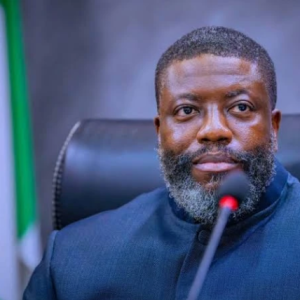
Oyetayo began his journalism career at TELL magazine in 2002 and later joined Punch Newspaper in 2010 as an external columnist. He is currently the Special Adviser on Media, Research and Documentation to Lagos State House of Assembly Speaker Mudashiru Obasa.
I remember Oyetayo’s book now because of the Ministry of Education’s laudable decision to bring back History as a subject in our schools.
That decision is more than a policy. It is the correction of a blunder committed many years ago when History was carelessly pushed aside as if we were a nation without a sense of history.
Oyetayo’s work may have taken Lagos as its canvas, but it is, in fact, a Nigerian story.
On those pages, one finds familiar names that shaped this country in different ways. Obafemi Awolowo, the late Yoruba leader. Adekunle Fajuyi, the soldier. Adeniran Ogunsanya, the politician. Alade Odunewu, the journalist.
Etim Inyang, the policeman. Ahmadu Bello, the Premier of the North. Even Governor Glover, the colonial administrator who stamped imperial authority on Lagos.
There are others too. Adetokunbo Ademola, the Egba prince who became the first African Chief Justice of Nigeria. Abubakar Tafawa Balewa, the schoolteacher who rose to become the first and only Prime Minister.
His flamboyant Finance Minister, Festus Okotie-Eboh. Ladoke Akintola, the Premier of the old Western Region. Babatunde Jose, the doyen of the Nigerian press. Kudirat Abiola, the democracy martyr.
Oyetayo also brings to light the lives of notable figures such as Murtala Muhammed, Mobolaji Bank-Anthony, Samuel Manuwa, Oba Musendiq Adeniji Adele, Sir Michael Otedola, Oyinkan Abayomi, Kofo Abayomi, Walter Carrington, Maitama Sule, Mobolaji Johnson, Muri Okunola, Molade Okoya-Thomas, Oyin Jolayemi, Ozumba Mbadiwe, Oba Akran, Oba Oniru, Nnamdi Azikiwe, Musa Yar’Adua, Ligali Ayorinde, Lateef Jakande, Herbert Macaulay, Funso Williams, among others.
The list runs long, and with each page the reader is reminded that history is not a dry classroom subject but a living record of people and choices.
And Oyetayo does not stop with the dead. He brings in the living too. Yakubu Gowon, the former head of state. Bola Tinubu, who received the book’s dedication for lifting the Lagos streets that inspired the work.
Today, Tinubu is President of the Republic, and under his watch, History is once again part of the curriculum.
The author presents these personalities in a way that keeps readers fully engaged. Their stories are never dull, because he goes beyond merely listing achievements and failures; he tells them with style and substance.
Take, for instance, the chapter on Fajuyi, which begins with these striking lines: “In the wee hours of July 29, 1966, when humans had let down their guards to snooze, the agents of death stormed Ibadan, the Western Region’s seat of government, with a cold-blooded objective to kill the Supreme Commander, Major-General Johnson Thomas Umunnakwe Aguiyi-Ironsi.”
The story of Oba Musendiq Adeniji Adele, as relayed by the author, is closely tied to a pivotal moment in Lagos’s history.
In 1950, at the Ibadan General Conference, Lagos was merged with the Western Region, a decision that did not sit well with Oba Adele and many Lagosians.
Though he enjoyed a close relationship with Chief Awolowo and was a member of the Action Group, which supported the merger, Oba Adele stood firmly for Lagos’s independence.
His persistent advocacy bore fruit in 1954, when Lagos regained its autonomy, inspiring the famous chant: “Gedegbe L’Eko Wa”— “Lagos is Independent.”
The book shows us that Oba Adele’s commitment to Lagos went even further. In 1956, he wrote to Mr. Alan Lennox-Boyd, the British Colonial Secretary, passionately urging the creation of a distinct Lagos Region.
He anchored his plea in history, referencing the Treaty of Cession of Lagos in 1861 with Oba Dosunmu, reminding all of Lagos’s unique status and heritage.
The book, in its section on Ademola Adetokunbo, recalls that Northern Nigeria was on the brink of becoming a country of its own in 1966.
It was Ademola, together with the British High Commissioner in Lagos, who played a decisive role in preventing Nigeria’s disintegration.
They persuaded General Yakubu Gowon, who had assumed power after the death of General Johnson Aguiyi-Ironsi, not to support secession.
At the time, many Northern officers believed that the foundations for Nigerian unity no longer existed.
The book notes that Abubakar Tafawa Balewa was the first Nigerian to grace the cover of America’s influential TIME Magazine.
In its December 5, 1960 edition, the magazine described him as “The Perfect Victorian.”
It wrote: “No man better symbolises the strengths and hopes of independent Nigeria than Abubakar Tafawa Balewa. At 47, he is slight of figure (5 ft. 8½ in.), and his wispy moustache and greying crew-cut beard make him appear older than his years.
Reserved and unassuming, he is a rare bird in a land famed for flamboyant politicians, once described by an African magazine as a ‘turtledove among falcons.’”
The civil war remains one chapter of our history that we often shy away from teaching the younger generation. In Gowon’s section, Oyetayo offers a glimpse into that turbulent period, including the role played by Olusegun Obasanjo.
Yet, like Biafran leader Emeka Odumegwu-Ojukwu, Gowon has not written a personal account of the war.
Through the story of Justice Idowu Taylor, Oyetayo reminds us that not all Nigerian judges were tainted by corruption. Taylor stood out for his uncompromising independence and integrity.
A striking example was his refusal to attend a social event hosted by the military governor of Lagos, at a time when his court was presiding over cases brought against the government.
By distancing himself from such occasions, he demonstrated a rare commitment to judicial impartiality and underscored the principle that justice must not only be done but must be seen to be done.
His stance offered hope that the judiciary could serve as a bulwark against executive excesses.
Oyetayo has offered us a truly priceless gift. Through his skillful weaving of history, geography, political insight, he brings Lagos, and by extension Nigeria, vividly to life.
At a time when many of us overlook the small details that shape our own existence, he draws us into reflection and gently reminds us that history matters.
This book compels us to reflect on whether our country might have fared better had some of the figures profiled here made the right choices from the outset, or set aside personal ambition, ego, and ethnic sentiment.
It also has the power to provoke questions about how their failures may have paved the way for military intervention.
My final take: Adeshina Oyetayo’s ‘Behind the Streets’ is more than a book; it is a journey through time that deserves a firm place in our History curriculum.
Within its pages, students will not only rediscover the past, but they will also recognise the truths of the present and have a vision of tomorrow.
Researchers, as well as anyone with an interest in Nigeria, will find it a valuable and enriching companion.